The Partnership for West Coast Whale Entanglement Action: Accomplishments of Year Two

Two years into the  Partnership and we continue to make great strides along the US West Coast

Reports and Responses

2025 was another year of high entanglement reports along the US West Coast. Thirty-three entanglements were reported along the US West Coast, but the totals are still being adjusted as our international partners review their recent cases, with some involving US gear.

CRC responded to entangled whales in California, Oregon, and Washington.

CRC staff spend over 15 days at sea responding to entangled whales. 

2026 is also starting off with at least 6 entanglements already reported in California.

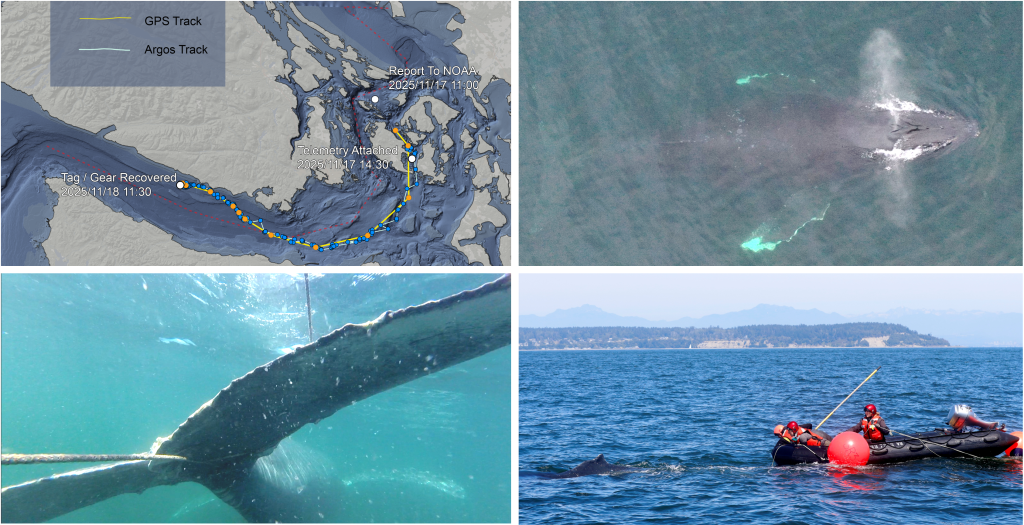
These images represent just four of the reports in Washington State in 2025. Top left is the track of a satellite tag used to track Eugenia, an entangled humpback from last November. Top right is a drone image confirming a whale in Puget Sound was gear-free. Bottom left and right are images from both of Starry Knight's disentanglement events.

Advanced network capacity

NOAA promoted a PNW responders to Level 3 (authorized to attach telemetry), strengthening the network’s ability to respond to entanglements in Washington State.

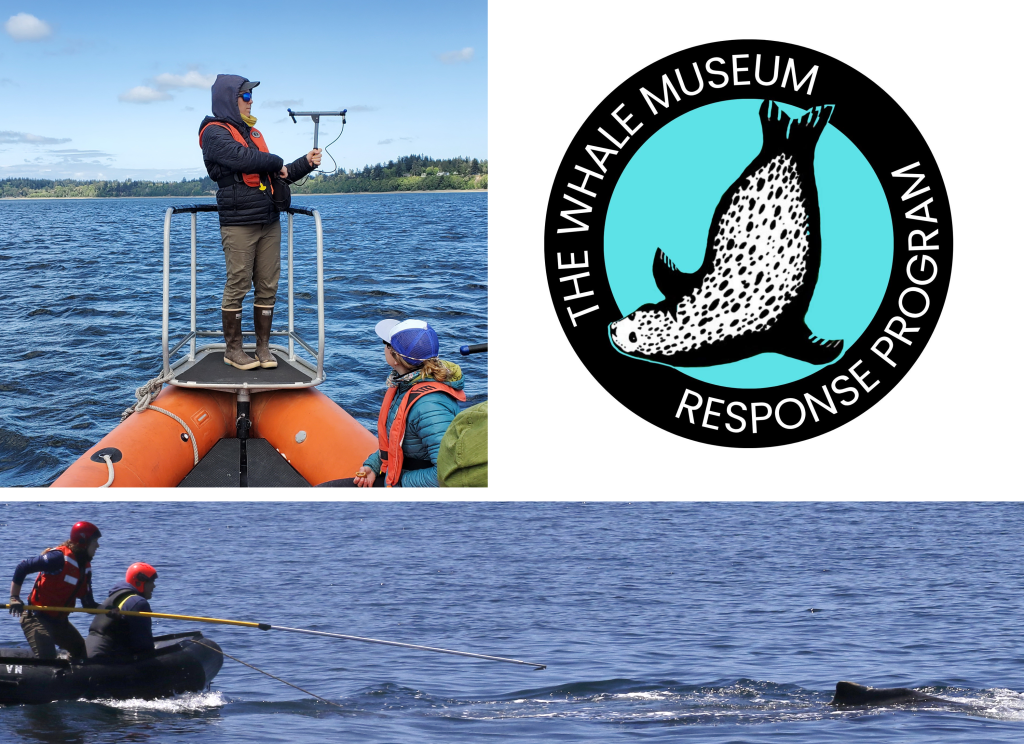
The responder is a staff member at The Whale Museum on San Juan Island and participated in 6 on water responses in 2025. She participated in the L3 training last spring with CRC and another refresher last fall, gaining invaluable experience working along side Cascadia’s responders to free two entangled whales. 

Click below to learn more about the West Coast Large Whale Entanglement Response Network and the Levels for Authorized Responder

Our network's newest Level 3 responder, practicing telemetry in the top photo and in the bottom photo working along side CRC Level 5 responder to free Starry Knight

Improved responders’ skillsets

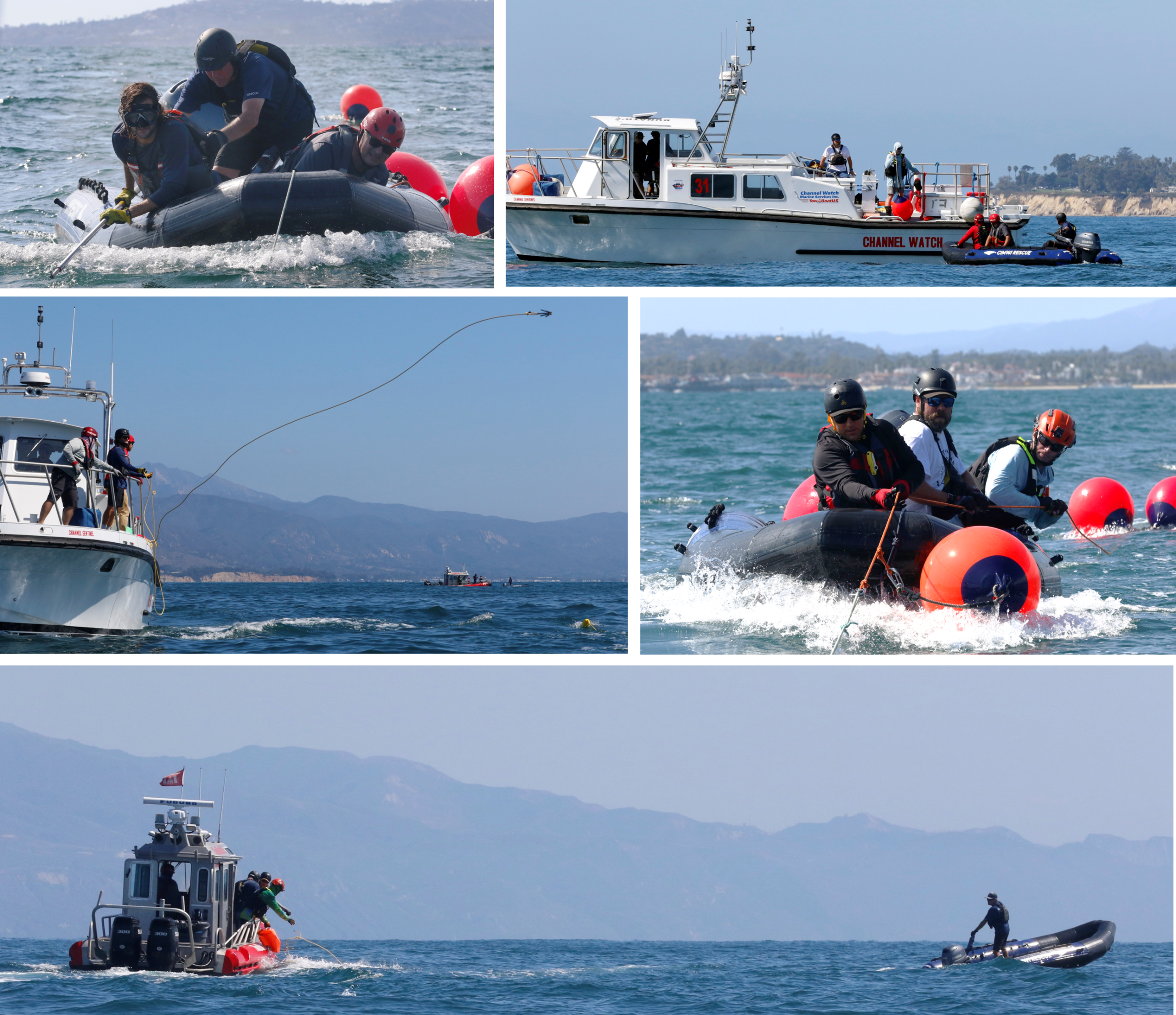
Conducted a Level 4 training in Santa Barbara, California, along side the local L4 responder. This was a great training to exchange ideas and techniques used from different response platforms. The Santa Barbara team has a great working relationship with Tow Boat US, whose staff are trained responders and volunteer the use of their vessels for fast responses.

Conducted a virtual Level 2 training focused on the PNW to increase capacity and start building a solid base for future responders

Assisted The Whale Museum and SeaDoc Society with their San Juan County fall training. Unknowingly, this training prepared the team for a response just a week later in which they attached a telemetry buoy to an entangled humpback whale in November 2025.

Images from the Santa Barbara training with team members working from multiple platforms, including two from Channel Watch Marine Services, Inc., who donate their vessels and staff time to help respond to entangled whales in the reagion

Conducted outreach events

Cascadia conducted outreach events to engage communities and raise awareness about large whale entanglements. Many of these presentations focused on the PNW, involving management and industry partners.

You can view Seattle Aquarium’s Lightning Talk Series that includes 5 min presentations on Cascadia’s entanglement response and gray whale research

Reach out to us if you are interested in our team giving your organization/club/class a presentation about large whale entanglements.

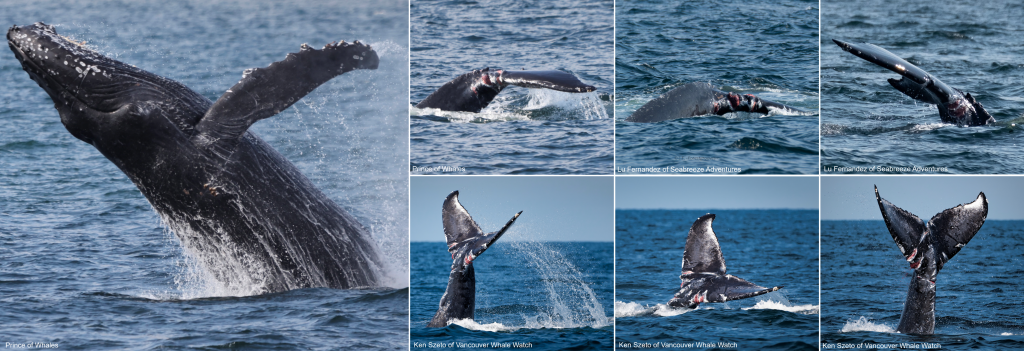
Images of Starry Knight, after its second entanglement, captured by members of the Pacific Whale Watch Association

These achievements have been made possible through support from the National Fish and Wildlife Foundation (for California-based activities), NOAA Prescott Grant (for Washington and Oregon-based activities), and the National Marine Sanctuary Foundation (for vessel support during California responses). We are grateful to these organizations for making this vital work possible.

We are grateful for a grant from Oregon Wildlife Foundation that enabled us to purchase tools and safety equipment for a new Oregon response team. We also greatly appreciate tools and equipment donations from Spyderco that make responses possible.  And we extend a immense gratitude to a private donor who is building and donating antennas to the network, which improve our ability to quickly relocate telemetry buoys in situations when teams have attached one to an entangled whale when conditions were not safe to proceed with the response that day. We have recently become an environmental partner for 1% for the Planet, and are looking forward to gaining support from their network partners. 

Future work and collaborations

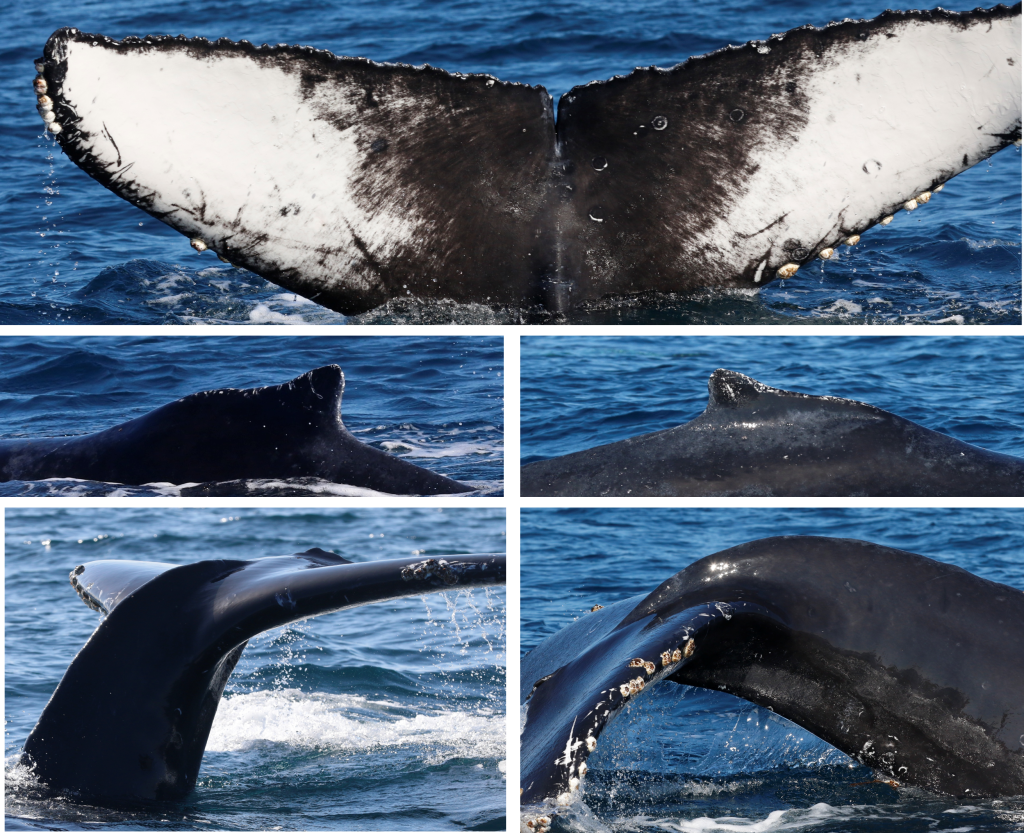
Images of CRC-23138 taken by an entanglement responder who joined CRC staff during a research survey to practice skills of working around whales and collecting data needed to help prevent entanglements. Images of tailstocks tied with ID photos help determine the proportion of the population that has interacted with gear as well as when they acquire entanglement wounds. This individual appears scar free.

While we have secured funding for entanglement responses in 2026, our survey efforts are not funded. This does not only mean there will be a gap in the > 40 year dataset that allows us to understand and monitor these populations, it also prevents us from being proactive, locating entangled whales that otherwise would not be reported and following up on whales we have disentangled. We are searching for new funding options and looking to people like you to help fund our work, ensuring continued progress to reduce entanglement risk for whales!

Want to help whales along the West Coast?
Here’s how:

1. Report Entangled Whales: 1-877-767-9425
If you see a whale in distress, report it immediately. Every unreported case represents not only a serious welfare concern, but a missed opportunity to gather critical data that can drive future prevention efforts. Call 1-877-767-9425 (1 877 SOS WHAL) or hail US Coast Guard on Ch16 to report an entangled whale.

Timely reports can save lives and support long-term solutions – learn more about standing by and reporting entangled whales.

2. Support Cascadia
With future federal funding uncertain, we are counting on you to be guardians for these ocean giants. Your donation helps ensure our trained responders can remain ready to act, that our research continues, and that progress toward an entanglement-free future doesn’t stall.

Help us keep whales safe in the Pacific Northwest and beyond – donate here or contact us to learn about more ways you can support our work.

3. Educate and Stay Informed
Share what you’ve learned! Encourage others to report entanglements, support response efforts, and get involved. Stay up to date on our research and response efforts by joining our mailing list and following us on social media!

Together we can create a safer ocean for whales – starting with the ones who need us most

All response activities are conducted by authorized responders under NOAA permit #24359, following international and national safety standards that prohibit entering the water and prioritize the safety of both whale and crew.
Images taken under and research & response activities conducted under NOAA permit #’s 16111, 18786, 21678, 24359, and 28850.