
Historic haul-out sites in southern Puget Sound
Harbor seals, Puget Sound’s most widely distributed marine mammal, have been finding it harder to find safe places to rest, give birth, and nurse their pups.
Historically, harbor seals utilized natural haul-out areas throughout southern Puget Sound that included many islands and spits including Heron, McMicken, Cutts, and Gertrude Islands as well as areas like the Nisqually Delta.
Some of those areas, like Gertrude Island, were protected as being part of federal then state prison and now wildlife area that restricts human activity. Other areas, like the haul-out area at Heron Island, were actually dynamited during the period that harbor seals were actively hunted and bountied by Washington State through the early 1960s and before protection.
1970 - early 2000's
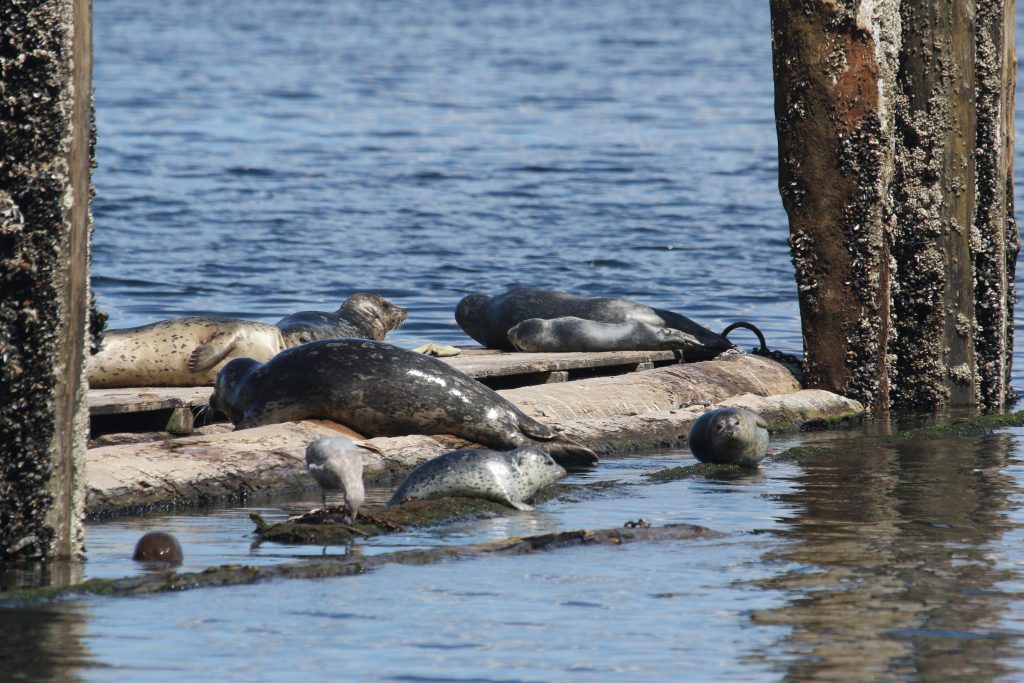
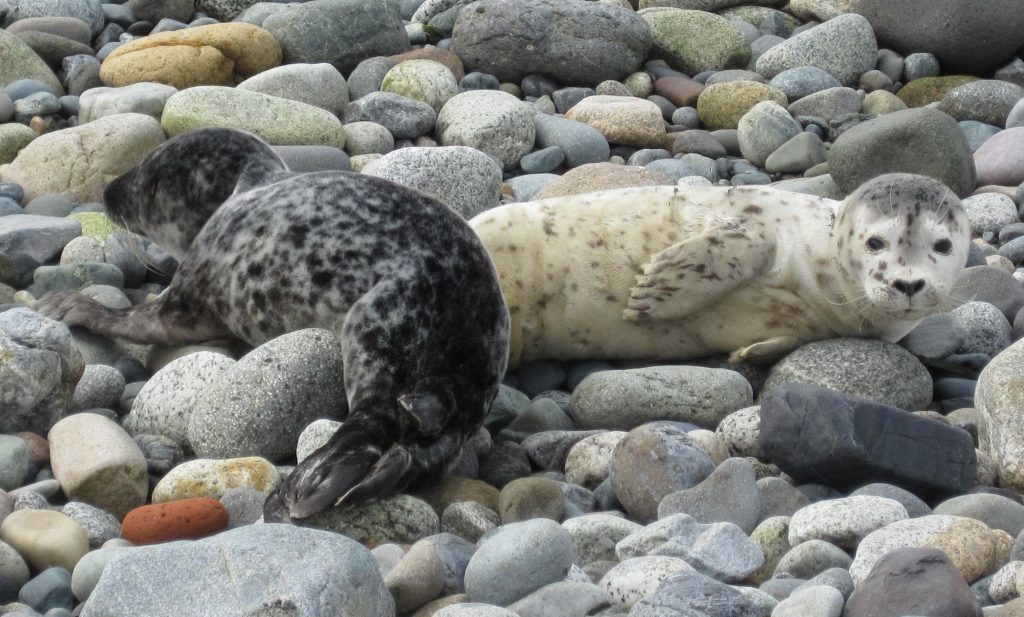
Over the last 50 years, many of those traditional haul-out sites have been developed for human use, forcing harbor seals to use man-made habitats like log booms and recreational floats to rest and give birth.
Unfortunately, those too are now disappearing, leaving harbor seals with fewer and fewer choices in which to care for their pup.
At Woodard Bay in Henderson Inlet, harbor seals found a home using the log booms that were part of a Weyerhaeuser facility where logs were transferred from rail cars and formed into large rafts for transport to mills. That operation closed in the early 1980s and the area was designated a Natural Resources Conservation Area in 1987, providing protection and leaving many of the log booms intact. Up to 400 harbor seals and about 100 pups were documented using the site.
After 1990, the log booms began deteriorating steadily, reducing the amount of space for the seals down to where now there is almost no remaining habitat. DNR, the agency that manages the site, had discussions with various groups about maintaining some of the seal habitat but ran into opposition from some that felt the state should not be helping to create artificial habitat for seals that might be preying on valuable fish species.
Present day
The shrinking available seal habitat at Woodard Bay and other areas such as the log rafts that used to exist in Budd Inlet has left harbor seals scrambling for alternate locations, often having to settle for areas at marinas where there is a lot of human activity that disturbs these naturally wary animals.
Over the last few years, an increasing number of pups have been born on or near docks at local marinas like Swantown, Boston Harbor, and Fiddlehead. Numerous pups have also been born near a log yard in downtown Olympia, a noisy location that would not normally be chosen as a nursery area.
Disturbance during the pupping season can be particularly detrimental, since harbor seals nurse and rear their pups for a short 4-6 week period before they wean.
Some attendant mothers at these locations were clearly agitated with the levels of human activity but were thankfully unwilling to leave without their pups. Unfortunately in other cases, the level of disturbance caused mothers to leave pups behind and not return.
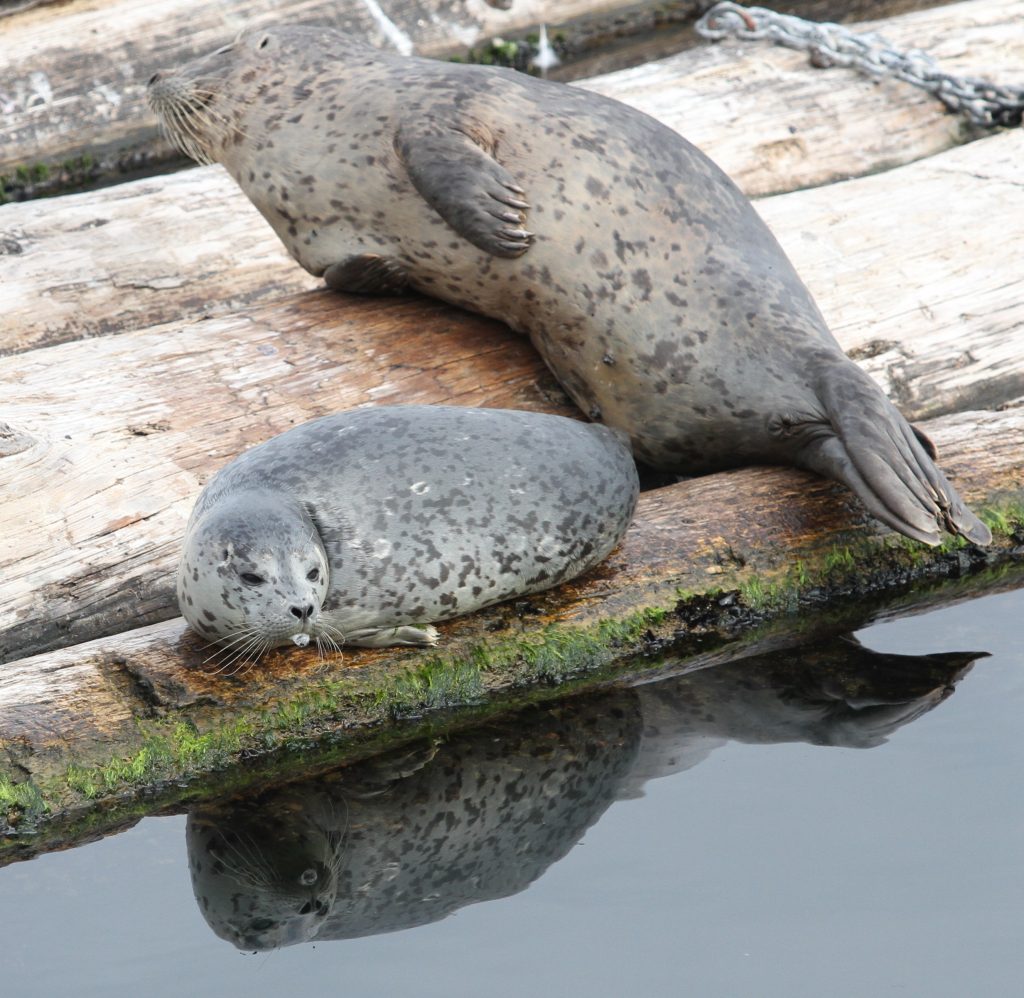
How you can help
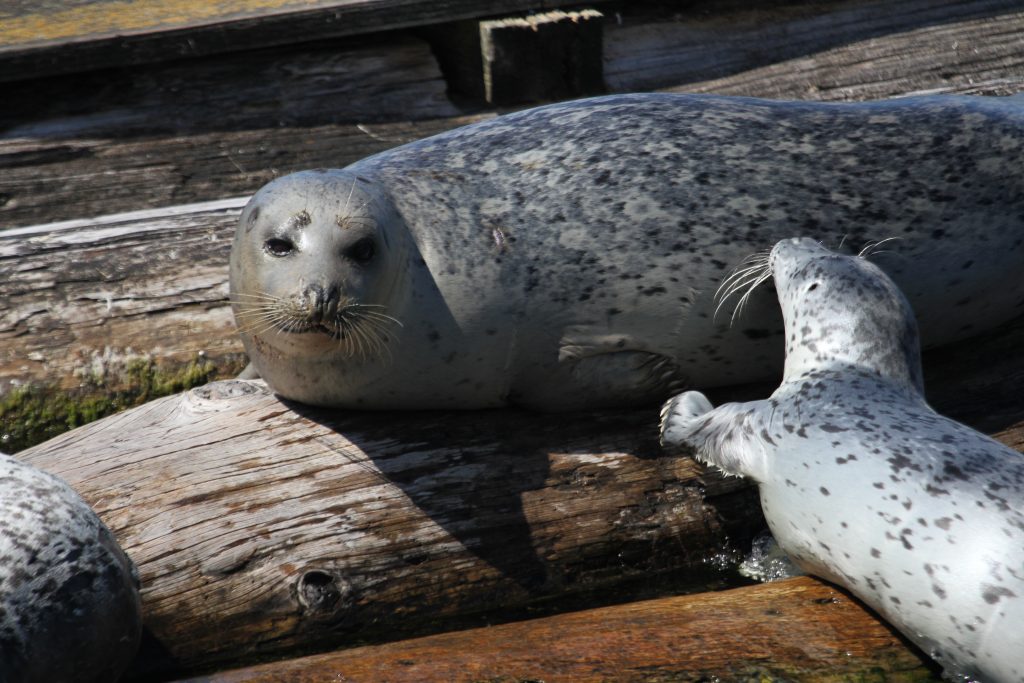
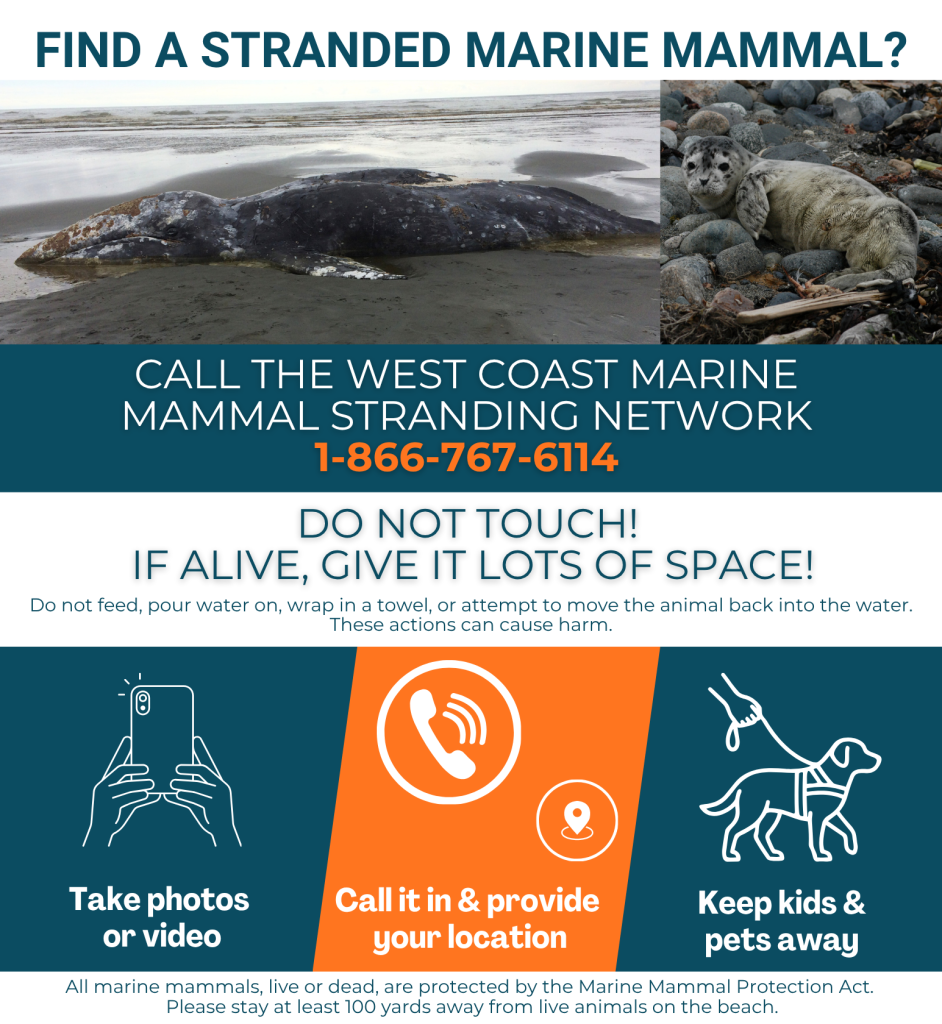
A distance of 100 yards (about a football field) from seals, in the water or on land, is recommended.
It is important for all boaters (including kayakers and paddle boarders) to not disturb seals where they are hauled out, especially during the critical pupping season in the summer.
Please keep kids and pets away from any animals on the beach.
Mothers will not return for pups unless they feel it is safe to do so. Seal pups, on the other hand, have not yet learned to be cautious and may approach humans or other animals. It is important that you leave the area if a seal pup is alone, so mom has the chance to return.
Seals that begin fidgeting and looking for an escape route are indicating that they are stressed and agitated, and you should back away slowly. If seals enter the water (if on logs or docks), or otherwise move away, you have disturbed them and it is urgent that you move far away so they can feel safe to return.
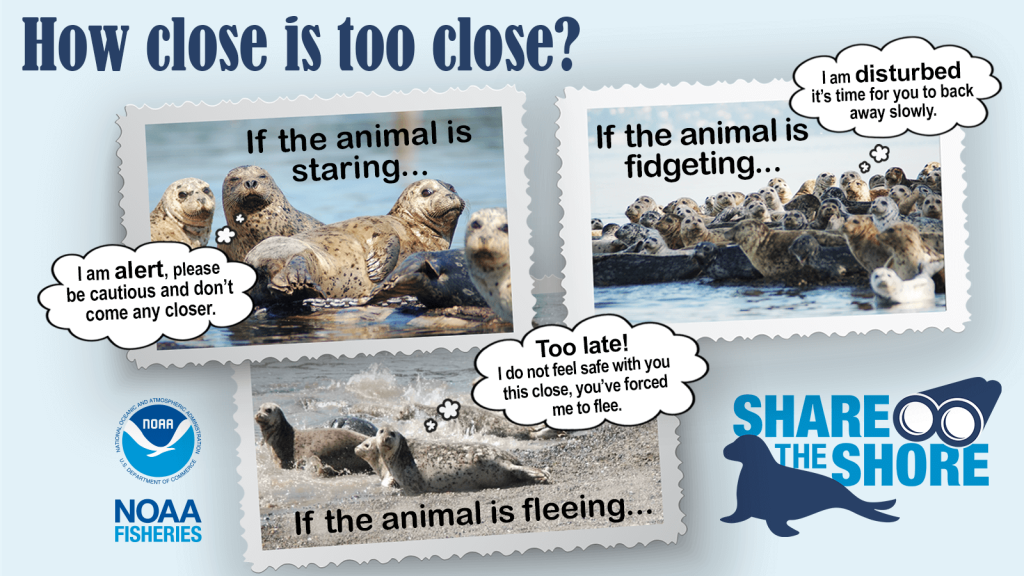
To report marine mammal harassment, call NOAA Enforcement at 1-800-853-1964
Please report any injured, stranded, or dead marine mammals to the West Coast Marine Mammal Stranding Network at 1-866-767-6114.
Want to learn more about harbor seals in Washington State?
Cascadia Research began studying harbor seals in the late 1970s. Our work has included tracking population size and pupping at local haul‑out sites, monitoring contaminant trends, conducting disease surveillance, determining causes of mortality, and evaluating the effects of human activity on harbor seal behavior and health.
Below is a sampling of our research over the decades. A full list is located on our Publications page
- 2021: Trends in Propeller Strike-Induced Mortality in Harbor Seals (Phoca vitulina) of the Salish Sea
- 2014: Age, Region, and Temporal Patterns of Trace Elements in Stranded Harbor Seals (Phoca vitulina richardii) from Washington Inland Waters
- 2013: Causes and Patterns of Harbor Seal (Phoca vitulina) Mortality at Smith Island, Washington, 2004-2010
- 2003: Trends and Status of Harbor Seals in Washington State: 1978-1999
- 1991: Censuses and disturbance of harbor seals at Woodard Bay and recommendations for protection
- 1989: Mortality of Harbor Seal Pups at Different Sites in the Inland Waters of Washington
Click below to lean more about Cascadia Research’s stranding program