Real-Time Public Report Helps Cascadia Free Entangled Whale off Westport, Washington
Entangled humpback whale off Westport, Washington, found and reported by sport fishermen, Sam Azar IV. Cascadia Research Collective, NOAA permit #24359.
A rapid response by Cascadia Research Collective, a member of the West Coast Large Whale Entanglement Response Network, successfully freed an entangled humpback whale off the coast of Westport, Washington, after a real-time report from a member of the public enabled responders to locate the animal quickly. This case comes during an especially active season for response teams along the US West Coast, with a higher-than-average number of entanglement reports for this point in the year. Nonprofits like Cascadia are increasingly reliant on public financial support to ensure teams have the resources needed to continue responding quickly and effectively throughout the year, and gather the information needed to prevent future entanglements.
Early Friday morning, Sam Azar IV, a sport fisherman out of Olympia, WA, contacted the NOAA entanglement hotline to report a whale with buoys near its head that appeared to be struggling at the surface. The whale appeared to be anchored in place by weighted fishing gear. As the Entanglement Response Network mobilized, Sam remained at a safe distance and continued to monitor the whale, providing critical, real-time updates.
The Response
Cascadia’s response team launched both an inflatable response vessel and a research vessel from Westport. Although the whale had remained largely stationary throughout the morning, it had dragged the anchoring gear approximately one mile by the time responders arrived on scene.
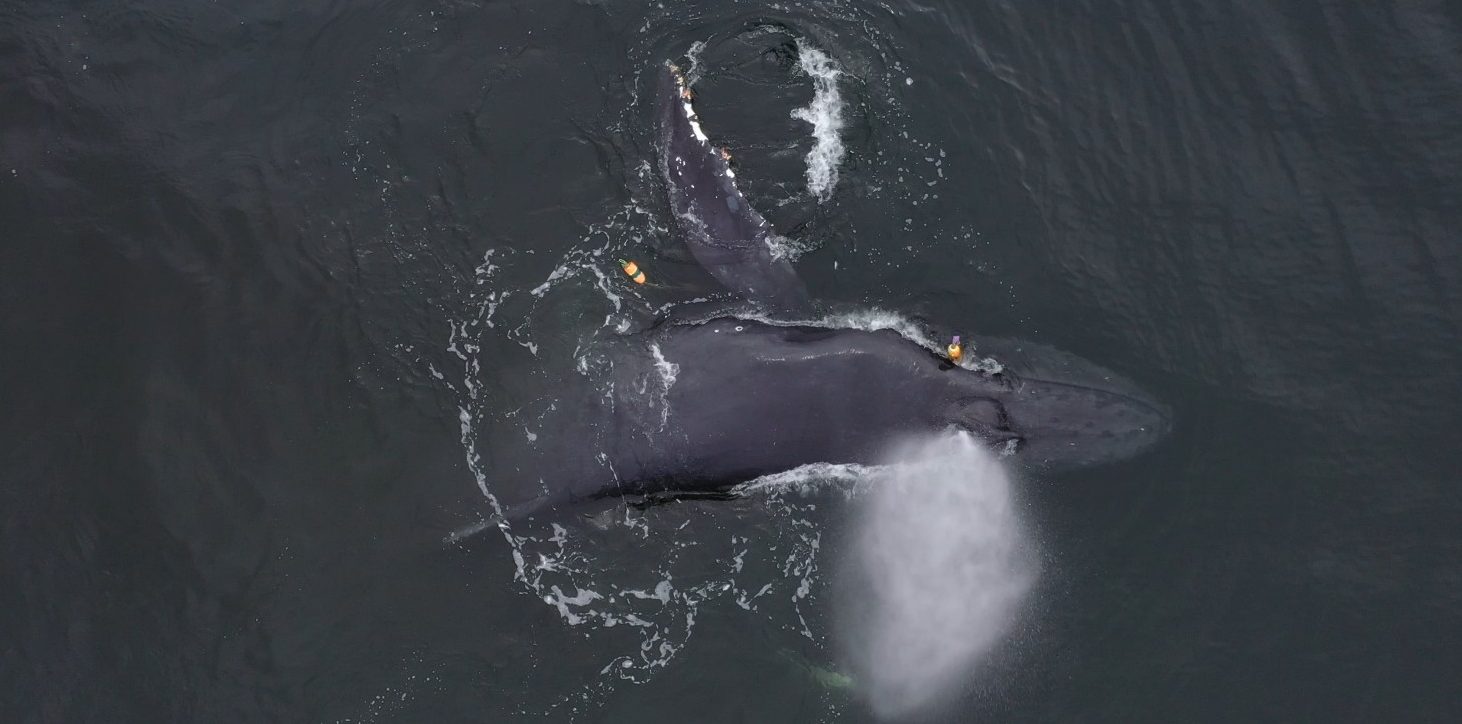
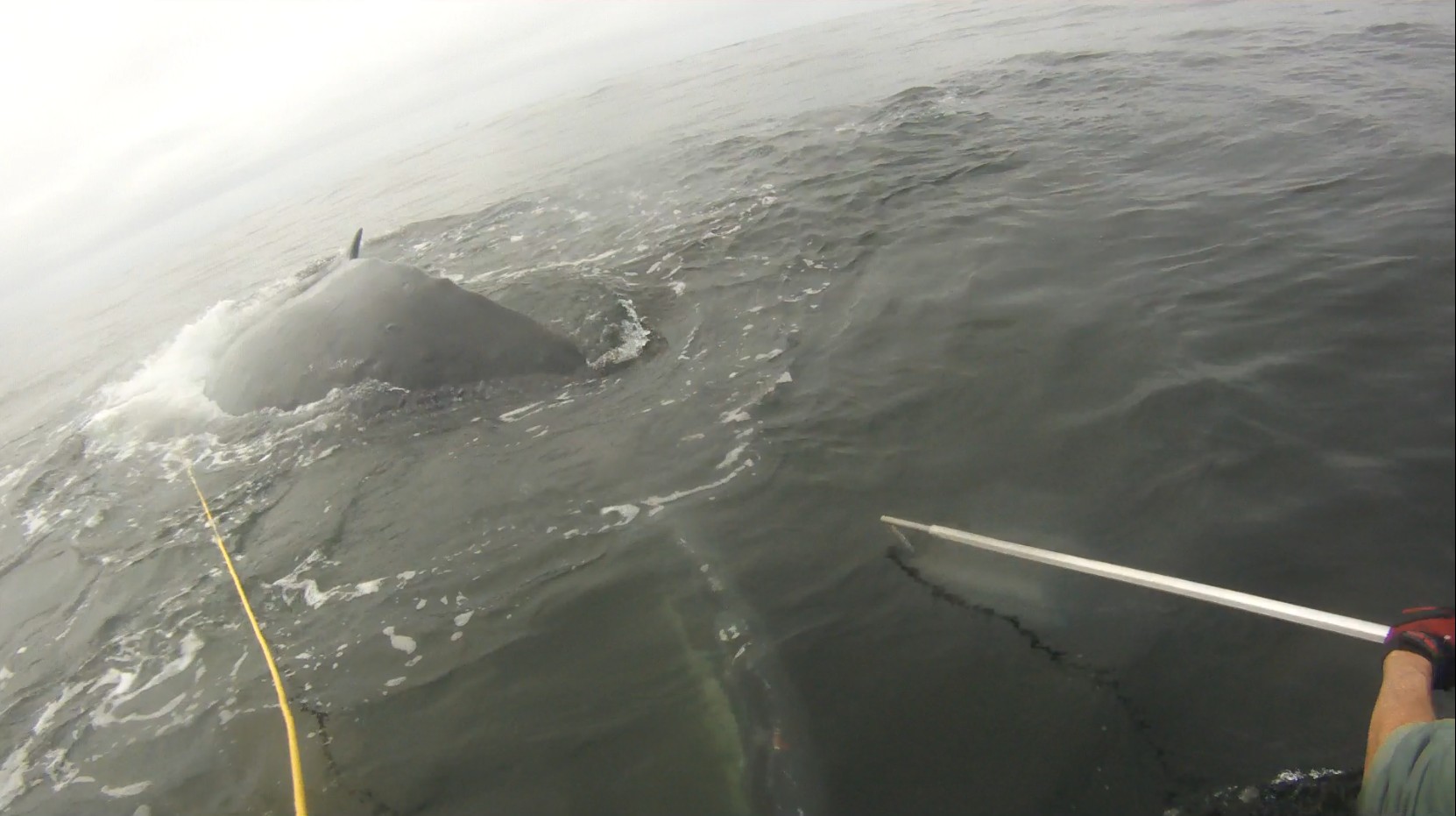
Using a drone and an underwater camera, the team assessed the whale to determine how the whale was entangled and in what order the lines needed to be cut to successfully remove the life-threatening entanglement. They determined the whale was likely “hog-tied,” a configuration in which a line passes through the whale’s mouth, wraps around the flukes, and trails down to heavy gear on the seafloor. This type of entanglement can prevent the whale from using its tail to swim or straighten its body, forcing it to rely on its pectoral fins to remain upright and maneuver.
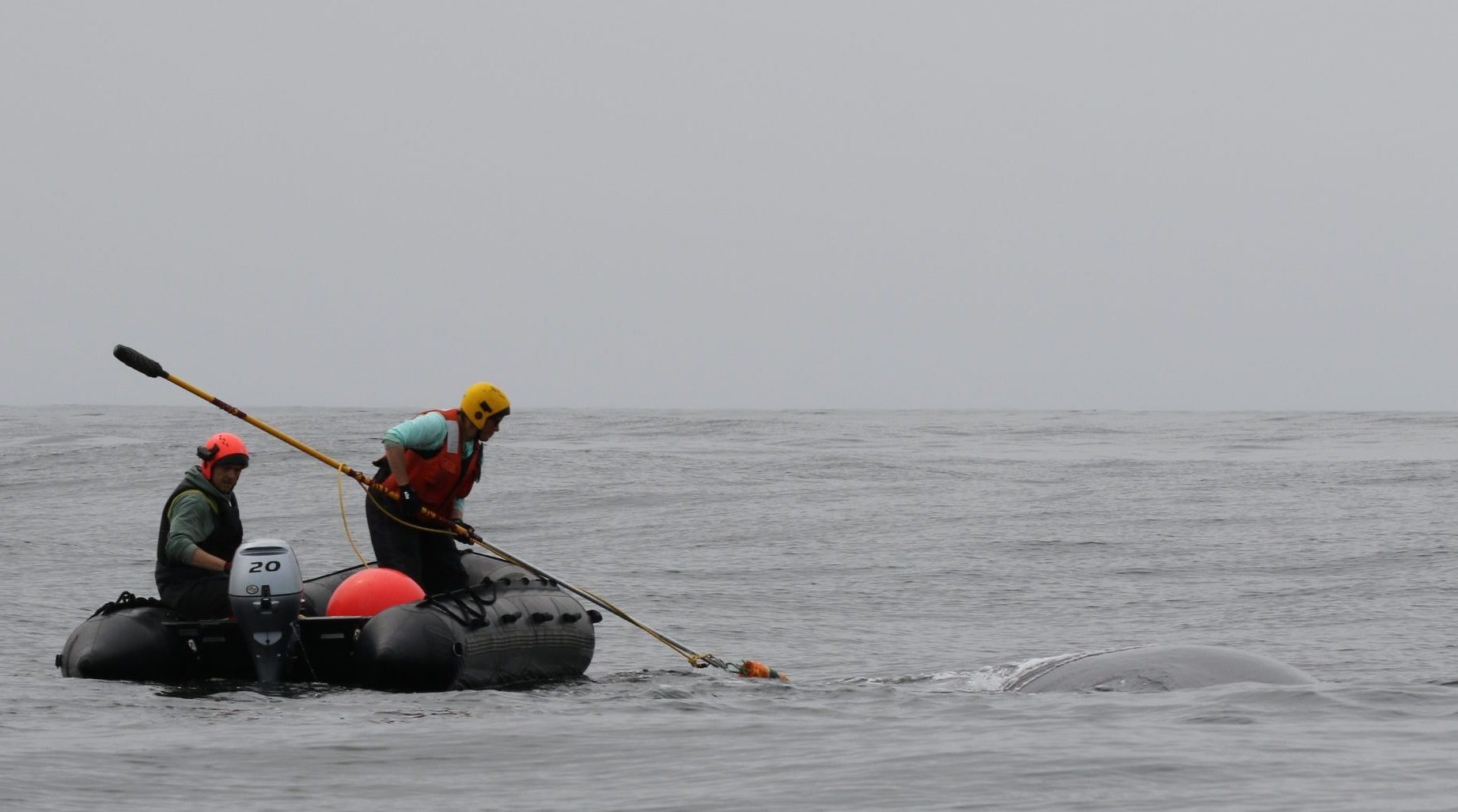
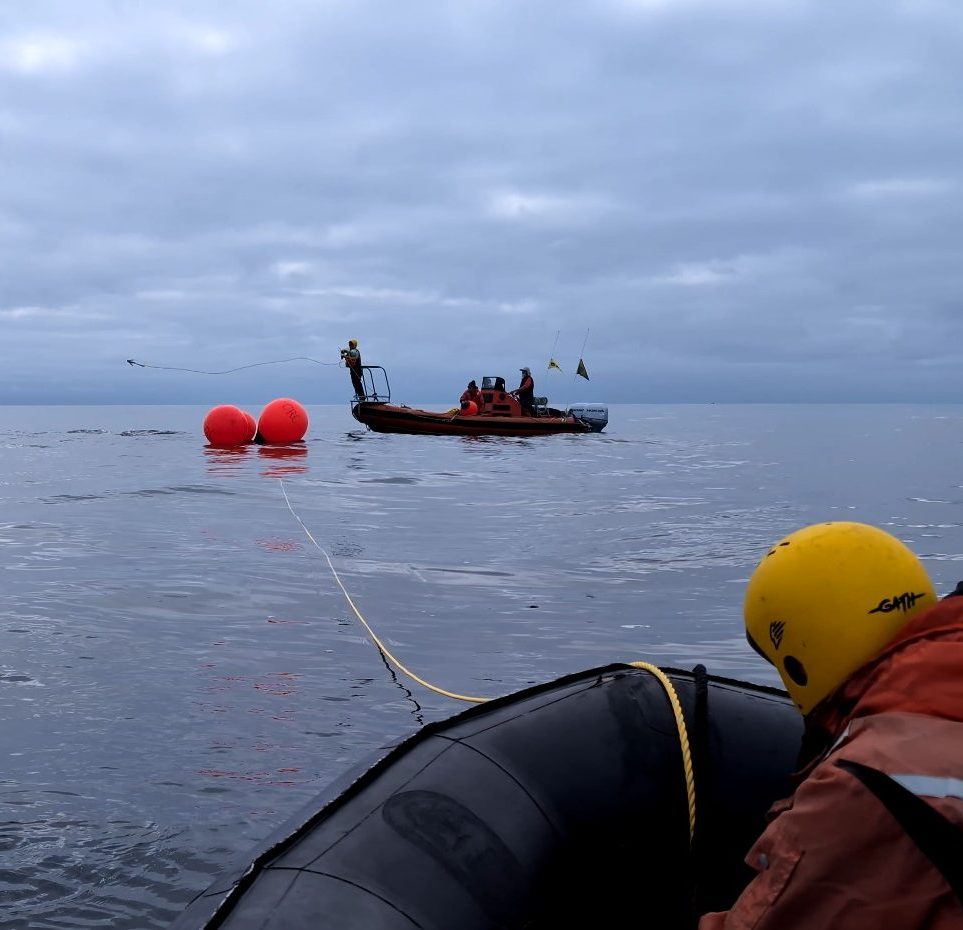
Response team adding a control line onto the surface gear. Cascadia Research Collective, NOAA permit #24359.
Response team working from a small inflatable to cut lines entangling the whale’s flukes. Cascadia Research Collective, NOAA permit #24359.
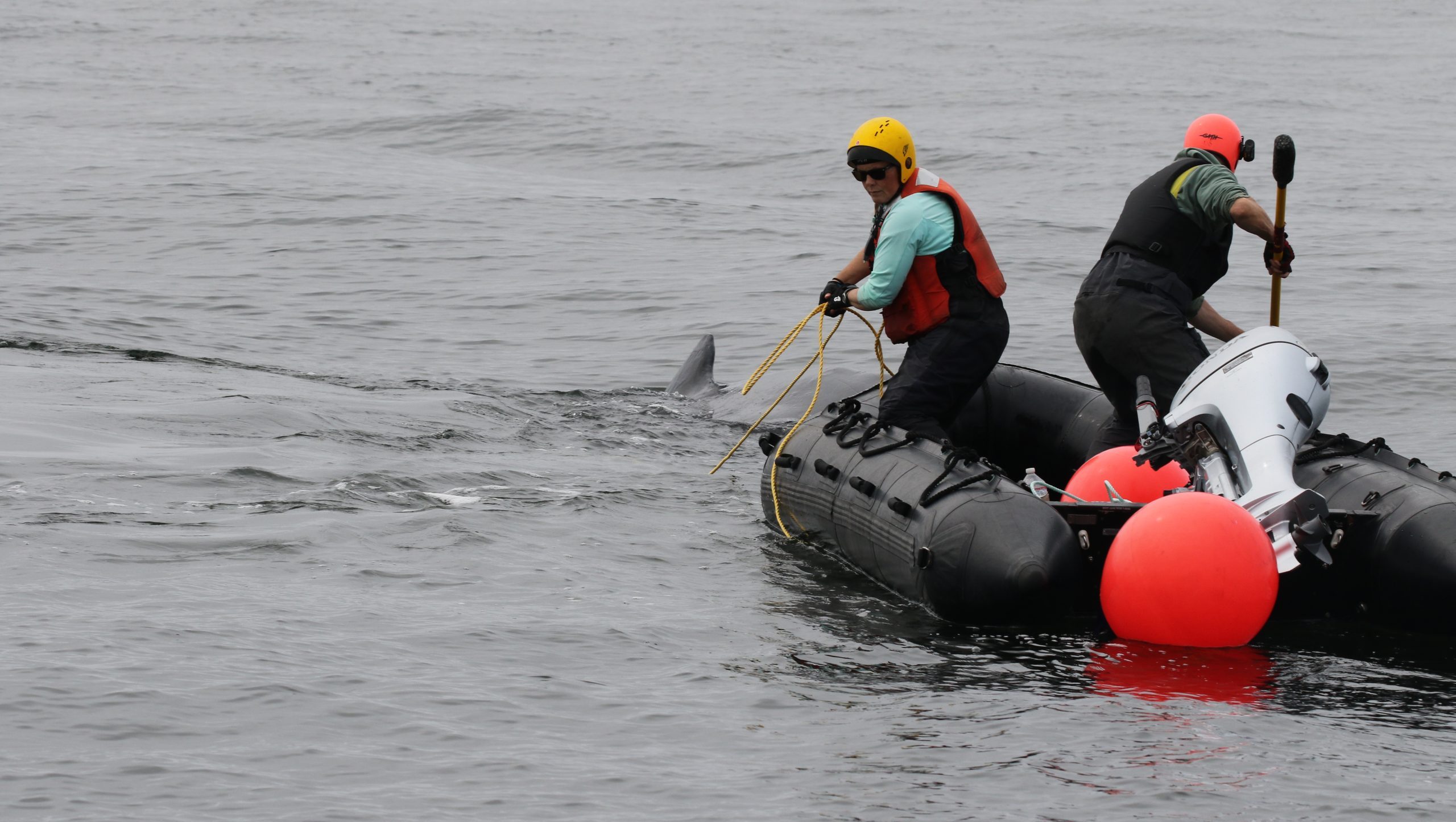
Response team using specialized hooked knives to cut lines entangling the whale’s flukes. Cascadia Research Collective, NOAA permit #24359.
The team adapted their approach, shortening the trailing gear on one side and removing a buoy and control line from the lift side. This left only a short section of line in the whale’s mouth that is expected to be shed naturally once the whale resumes feeding. Shortly after, the whale made a prolonged dive and resurfaced at a distance. Drone observations confirmed the whale was swimming normally following the event.
“The outcome of this response really shows what’s possible when a whale is reported in real time,” said Doug Sandilands, responder at Cascadia Research Collective. “Not every whale survives these events, but more people on the water who know how to report and stand by can give these animals a real chance, and we can learn something that helps prevent the next one.”
The whale’s wounds appeared fresh, and its behavior suggested the entanglement had occurred recently. This significantly improves the likelihood of survival. The animal appeared otherwise healthy, increasing confidence in its recovery.
Entanglements remain one of the leading human-caused threats to large whales along the US West Coast. There has been a recent uptick in reports this year, keeping teams along the entire coast busy. Unfortunately, many cases are reported hours or days after the initial sighting, or without someone able to remain on scene, making it extremely difficult for response teams to relocate and assist the animal.
Responders using a cutting grapple to make the final cuts while maintaining a safe distance from the whale’s large flippers and fluke. Cascadia Research Collective, NOAA permit #24359.
About the whale
Cascadia identified the whale as CRC-19155, an adult female first documented in 2009 off Vancouver Island and has been documented wintering in Hawai‘i. Along the US West Coast, she has primarily been seen near Westport and the Columbia River. Cascadia last observed her in 2023 off Westport with a calf.
“We are hopeful that CRC-19155 will return to Westport next summer,” added Sandilands. “The lessons learned from this response will help make the ocean safer for her and her future calves.”
Data collected during this response will contribute to ongoing research to better understand and prevent whale entanglements.
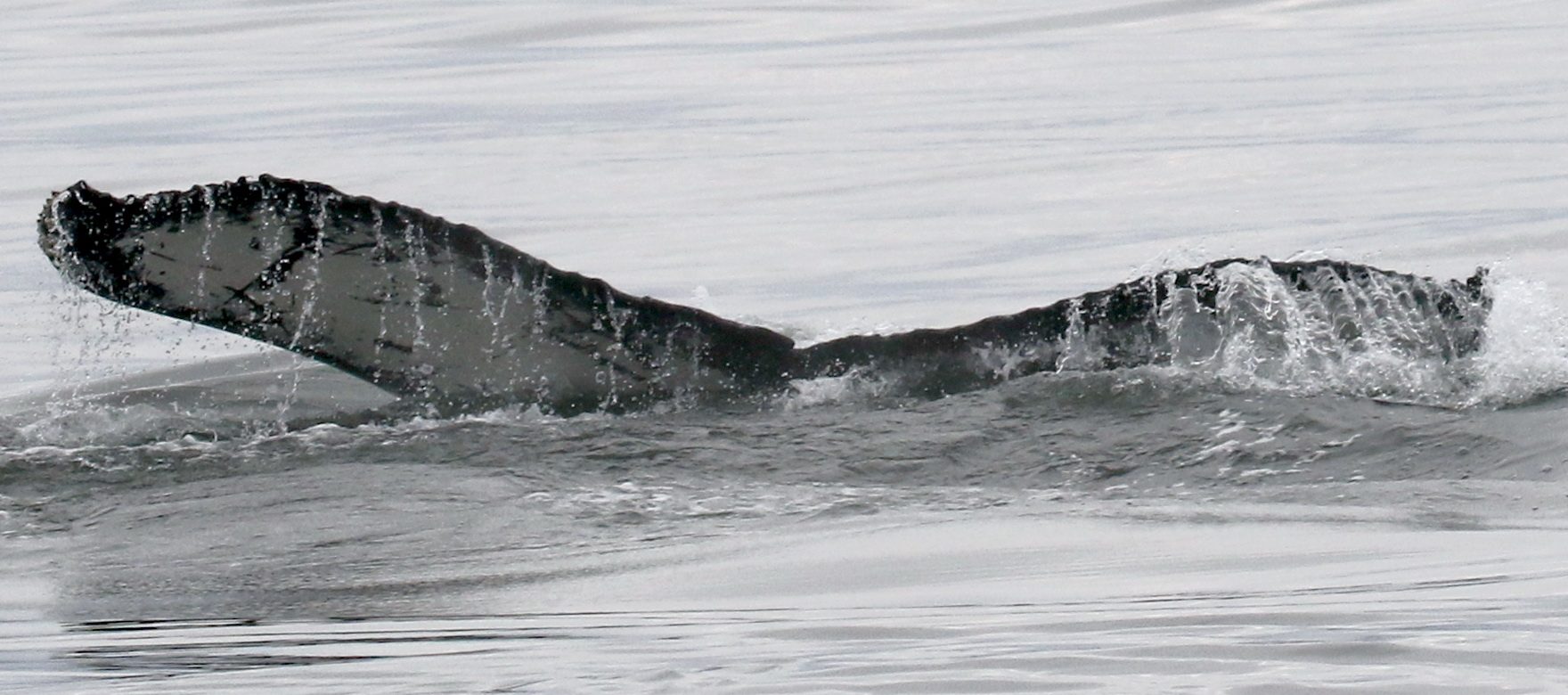
Fluke of CRC-19155 once she was released and started swimming normally. Cascadia Research Collective, NOAA permit #24359.
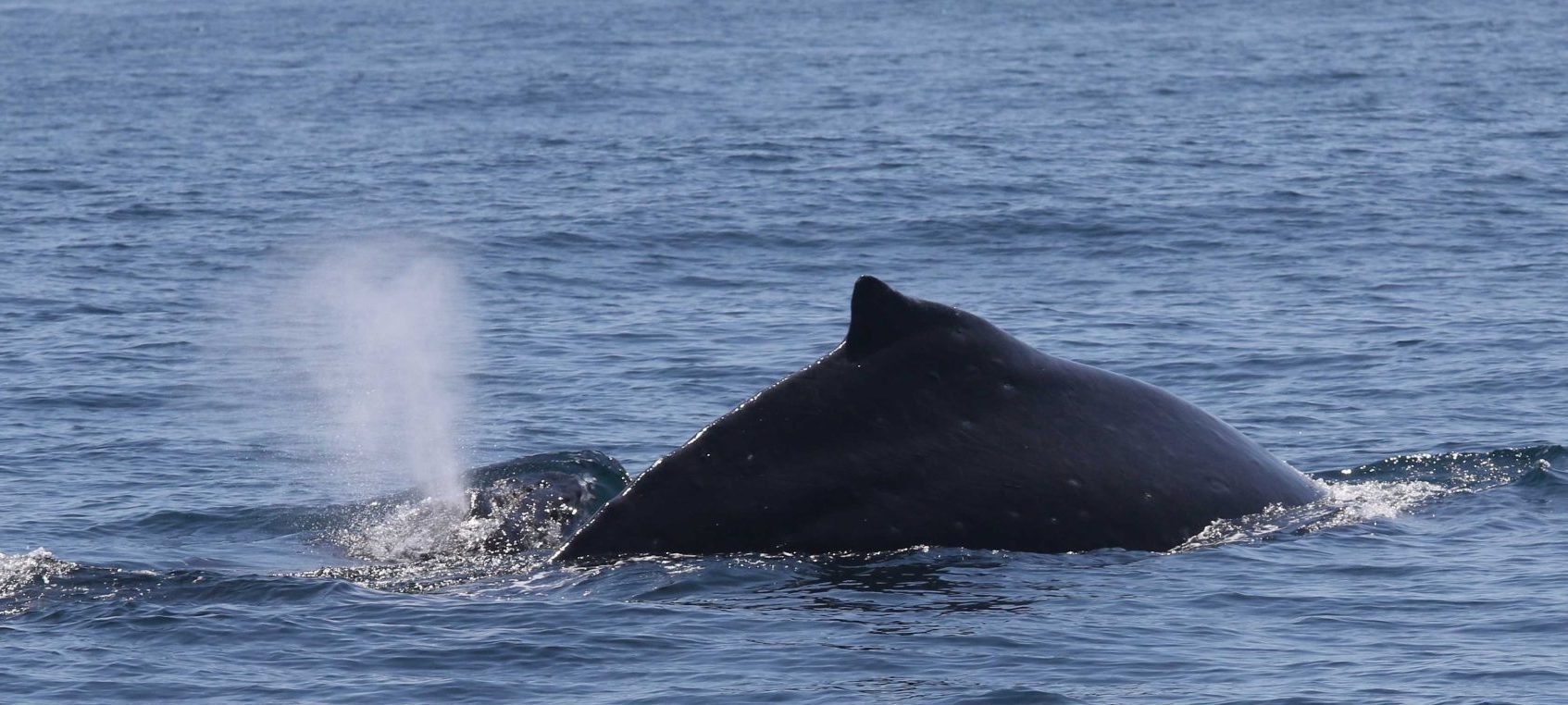
Image of CRC-19155 with her calf in 2023, documented by Cascadia off Westport, Washington. Cascadia Research Collective, NOAA permit #21678.
Immediately report the sighting to the NOAA entanglement hotline at 1-877-SOS-WHALE (1-877-767-9425) or hail the US Coast Guard on Ch16
Take video or photos of the whale and entangling material
Real-time reporting can significantly increase the chances of a successful response.
Watch a video about the response
The West Coast Entanglement Response Network is part of a national and global effort to reduce large whale entanglements through safe rescue operations, data collection, and prevention strategies. All response activities (including documentation, approaching the whale, attaching a telemetry tag, and removing gear) were conducted by trained and authorized responders under NOAA permit #24359, following international and national safety standards that prohibit entering the water and prioritize the safety of both the whale and the crew.