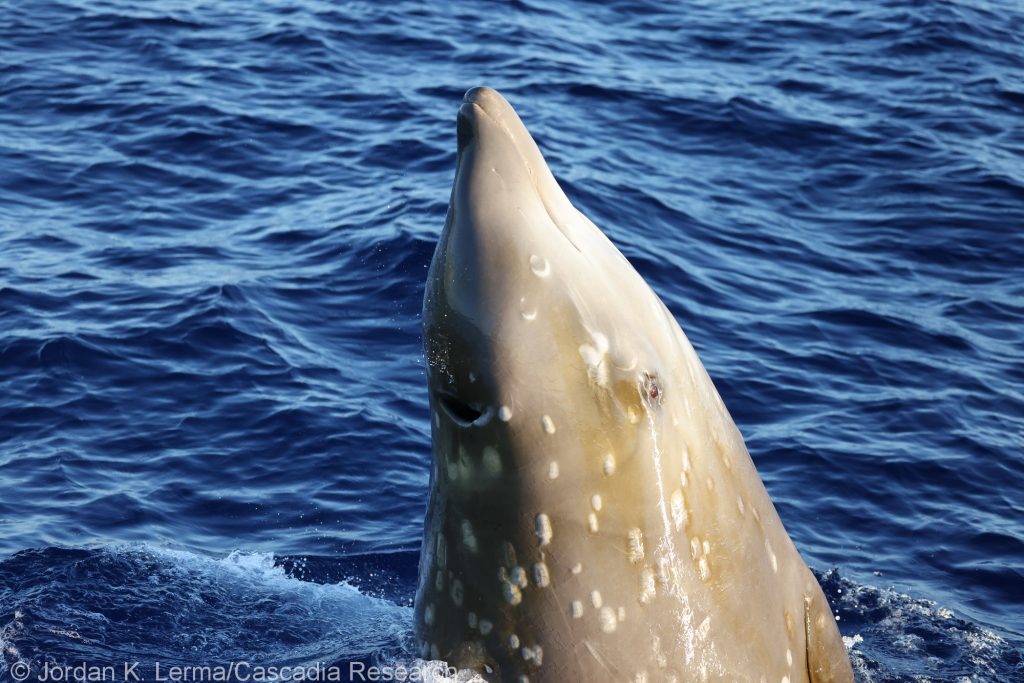
From November 10-20 we'll be undertaking a field project off Kona. We have three primary goals for this project, and a lot of secondary goals. First, we are hoping to find and work with false killer whales, including both the endangered main Hawaiian Islands population and the open-ocean population, to deploy satellite tags to track movements and examine diving behavior. Second, we are also hoping to find and work with both Blainville's and goose-beaked whales (note: the photo above is a goose-beaked whale seen on November 9th, 2023, spyhopping in front of our boat), to deploy satellite tags to examine both movements and diving behavior. Third, we are hoping to deploy finmount satellite tags (deployed with the TADpole tagging system developed by Woods Hole Oceanographic Institution and the Brookfield Zoo Chicago's Sarasota Dolphin Research Program) on either bottlenose dolphins or pantropical spotted dolphins, to examine movements. Our secondary goals involve working with all the other species we encounter, collecting identification photos and for some species collecting biopsy samples for genetics and stable isotope studies. During the 11-day period we hope to be on the water 9 or 10 days.
This work is funded by a grant from the Pacific Islands Fisheries Science Center, a contract from the State of Hawai'i, and a grant from the Office of Naval Research. Our primary field crew will include Colin Cornforth, Danny Barrios, Shelby Petros, Robin Baird, and Annie Douglas, and we will also have a number of volunteers.
End of field project update
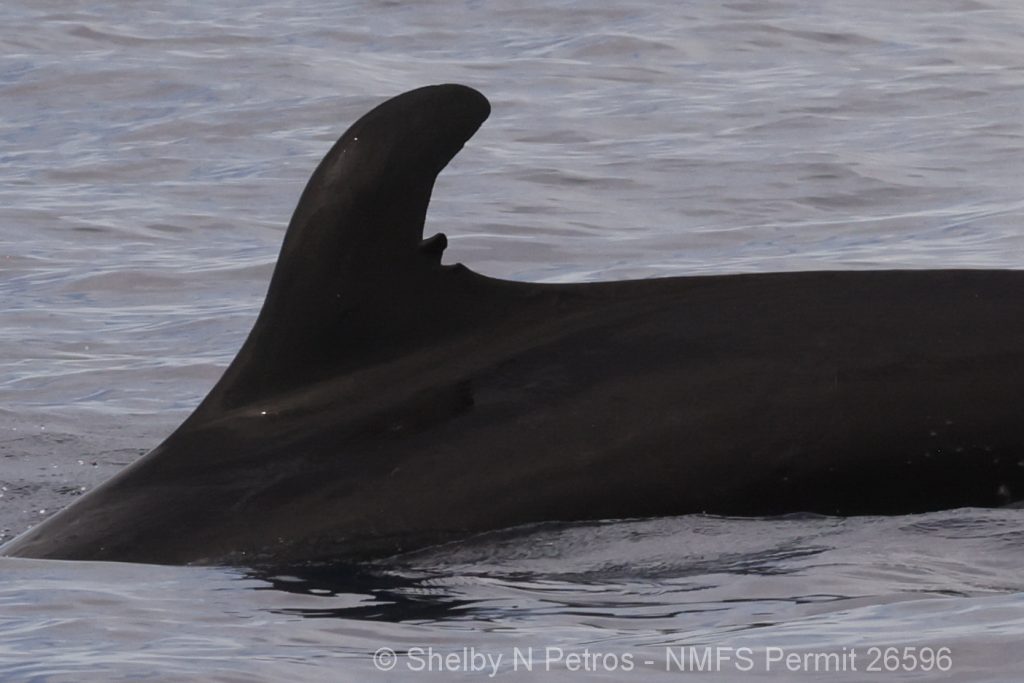
November 19th was our last day on the water for this trip. Overall it was an extremely productive trip, with encounters with 14 different species of marine mammals. On November 18th we encountered our highest priority species, false killer whales! The photo above is HIPc273, an adult female from Cluster 2 of the endangered main Hawaiian Islands population. This Cluster is the least studied of this population, in terms of ID photos, biopsy samples, or satellite tag deployments. In addition to ID photos of about a dozen individuals, we were able to deploy two satellite tags on individuals.
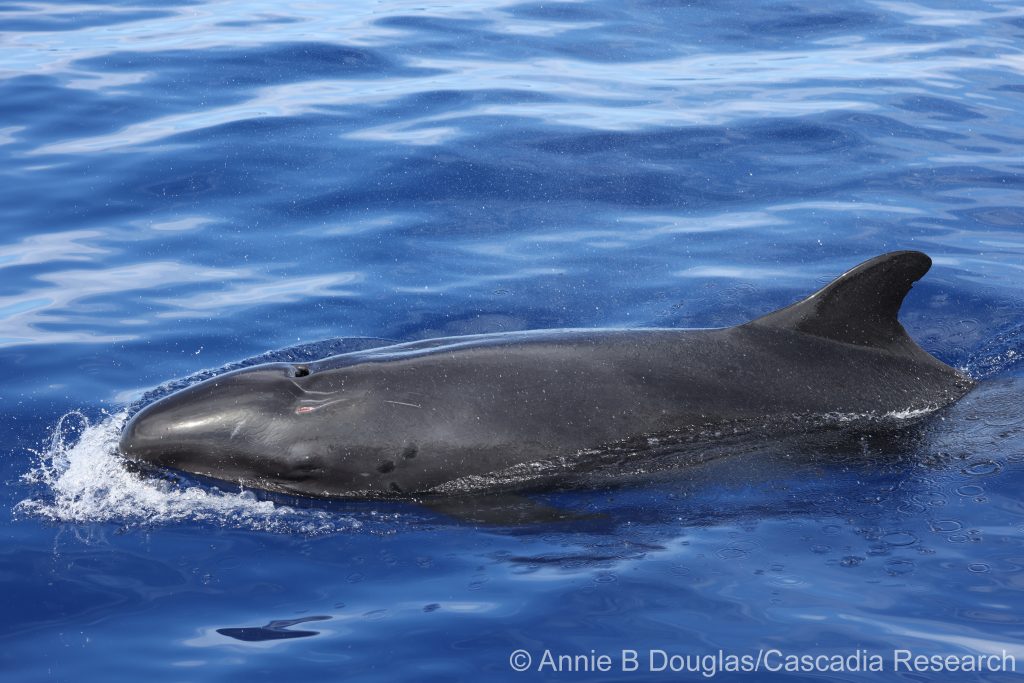
We've only previously tagged individuals from Cluster 2 on six occasions, the last time in 2022. Cluster 2 false killer whales spend most of their time off the north end of Hawai'i Island, rarely moving into more protected areas where they can be easily relocated, but we are hoping the tags last long enough that the group can be relocated for additional photo-ID.
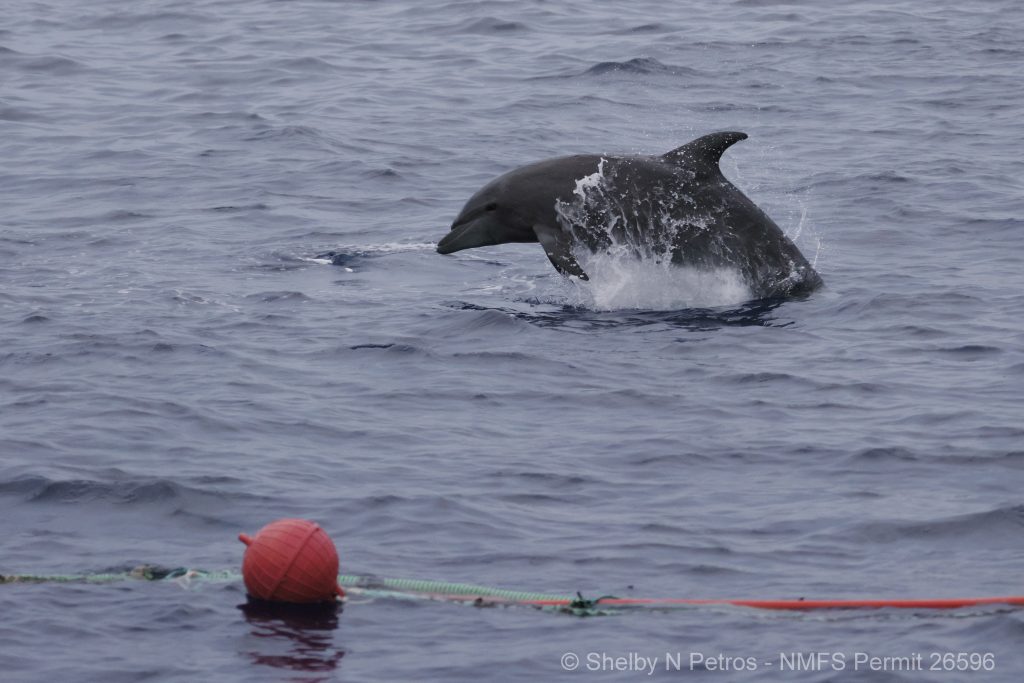
On the 18th we also encountered our second group of bottlenose dolphins for the trip (and our first sighting of monk seals) - these two species were associating with the fish farm in Makako Bay. We've previously published on the association between bottlenose dolphins and this farm - if you want to read a copy of the paper it is available here.
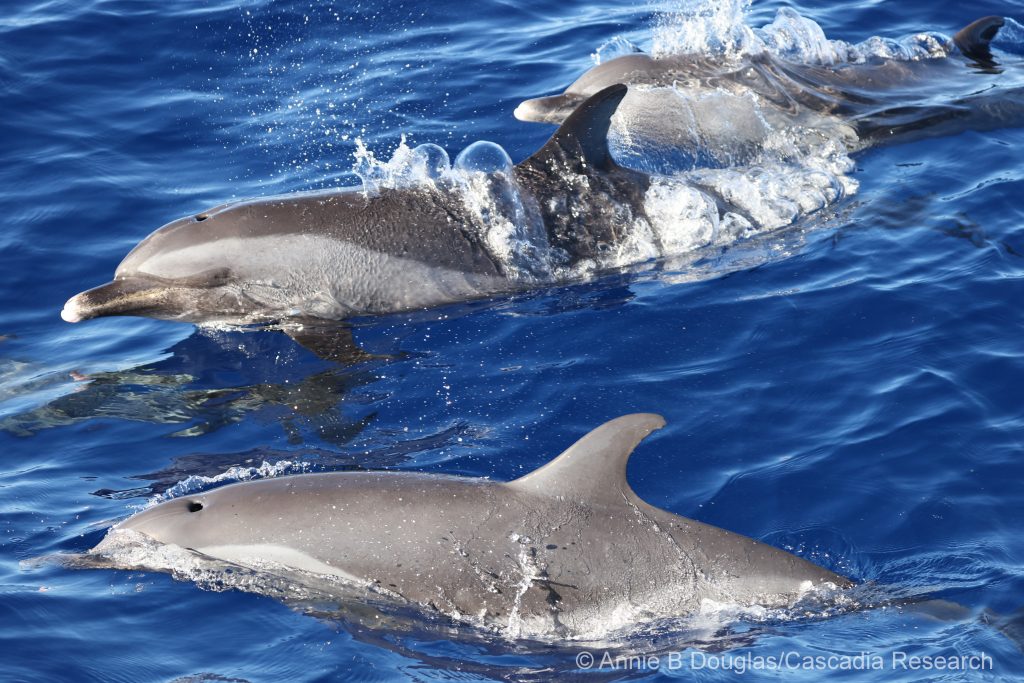
Pantropical spotted dolphins ended up being the species we saw most often this trip, although that was due in part to our ability to relocate the individual we satellite tagged on November 13th. Surprisingly, the second-most frequently encountered species this trip was Fraser's dolphin, as we documented the individual that is associating with the spotted dolphins on three different days.
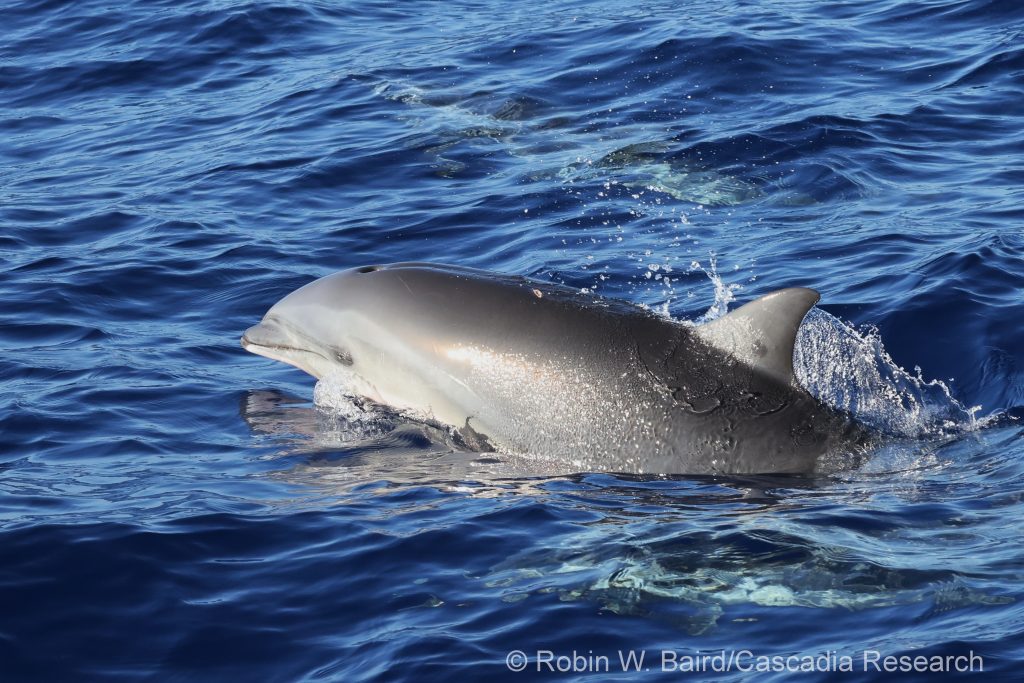
Another sighting of the Fraser's dolphin associating with the pantropical spotted dolphins, this time on November 16th.
November 15th update
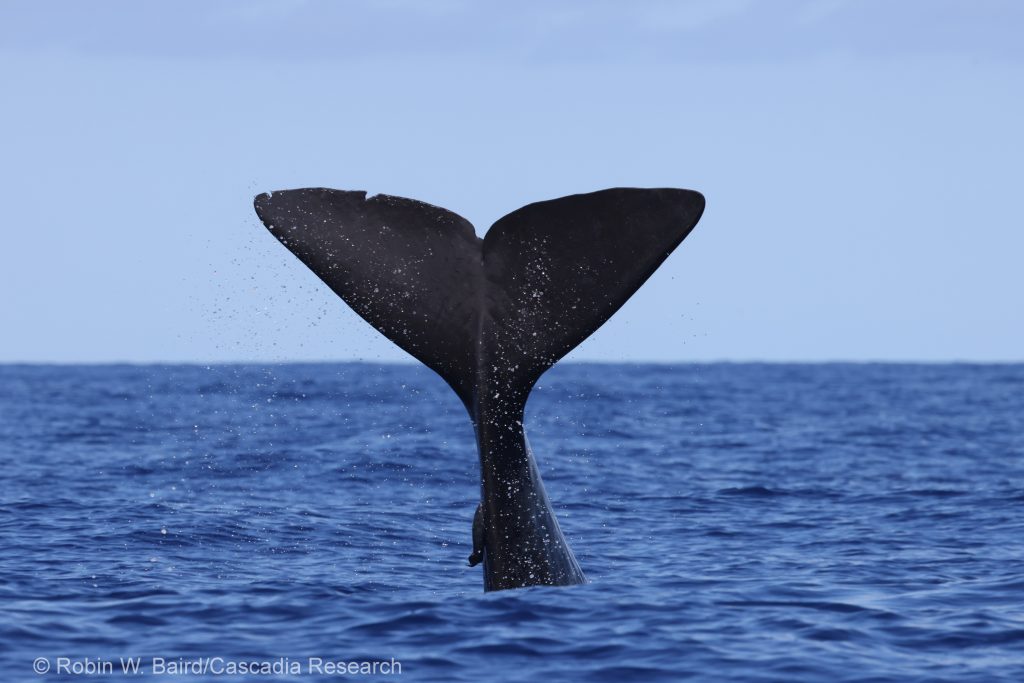
Today we were able to get farther offshore than our previous days this trip, spending most of the day in water deeper than 3,000 m (and some time >4,000 m), and encountered one of the open-ocean species that pass by the islands, sperm whales! We were able to get fluke ID photos of three individuals that we will contribute to a larger North Pacific comparison of sperm whale IDs. We've previously satellite tagged 12 sperm whales in Hawaiian waters, and tag data suggest they are part of a larger broadly-ranging open-ocean population. If you want to learn more about sperm whales in Hawaiian waters check out our web page on this species.
November 13th update
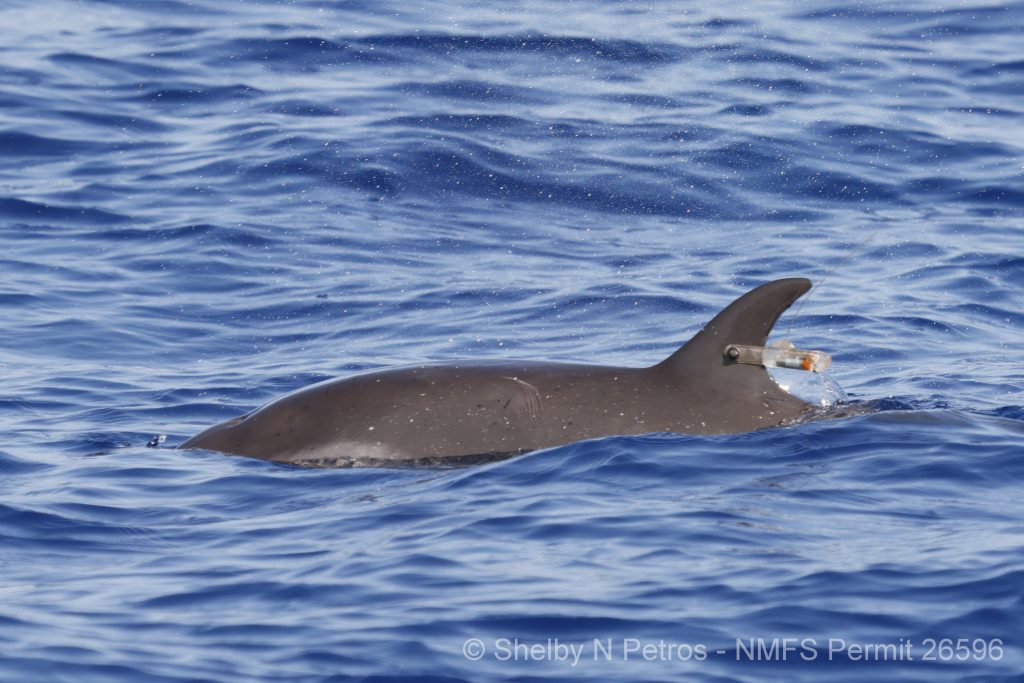
We have had an interesting and productive few days. One of the highlights today was an encounter with a group of pantropical spotted dolphins, and we were able to deploy a finmount satellite tag on one individual (photo above). This is the first time a finmount tag has been deployed on a pantropical spotted dolphin with the TADpole deployment system, and we are excited to see where this individual goes (and how long the tag remains attached). This tag is transmitting 12 hours per day, every second hour of the day. We've previously deployed 12 LIMPET tags on this species in Hawai'i, with an average duration of just 12 days. If you want to see what we've learned from some of our previous tagging of pantropical spotted dolphins check out this report.
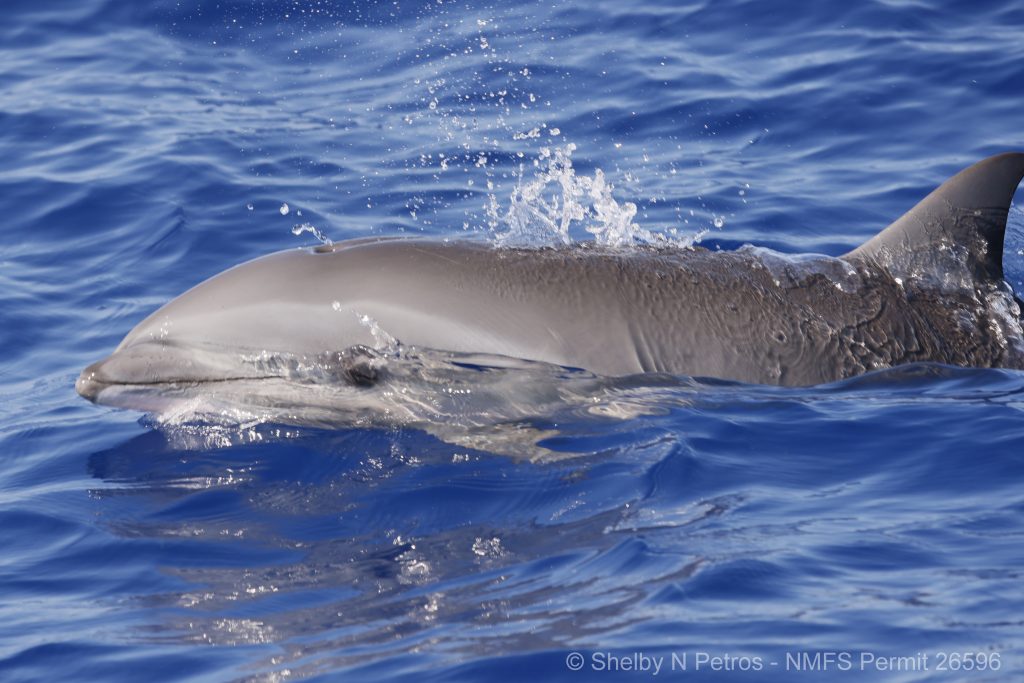
Mixed in with the spotted dolphin group was a lone Fraser's dolphin! Based on coloration and size this individual appears to be an adult female. Normally Fraser's dolphins in Hawaiian waters tend to avoid boats, but this individual was quite interested in the research vessel, and we were able to obtain a biopsy sample for genetic analyses.
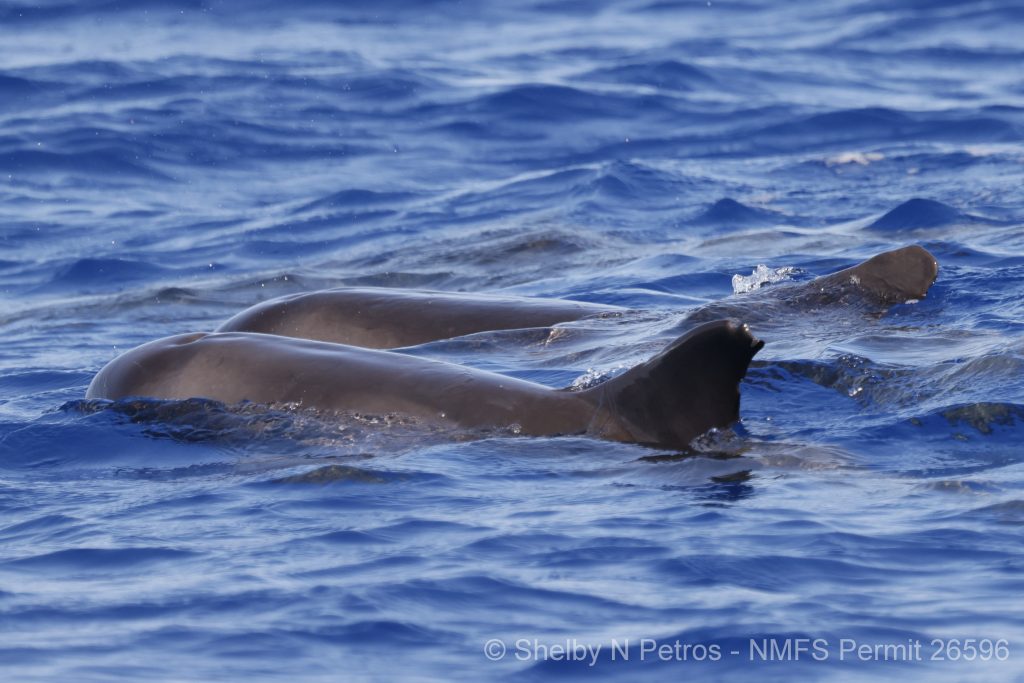
Thanks to a call from Hawaiian Adventures Kona, we also encountered a group of pygmy killer whales. We were able to get identification photos of most of the individuals present, and a comparison of some of the most distinctive did not reveal any matches to our photo-ID catalog, suggesting this group is from the open-ocean population. If you want to learn more about pygmy killer whales in Hawai'i, we published a paper on this species in 2024.
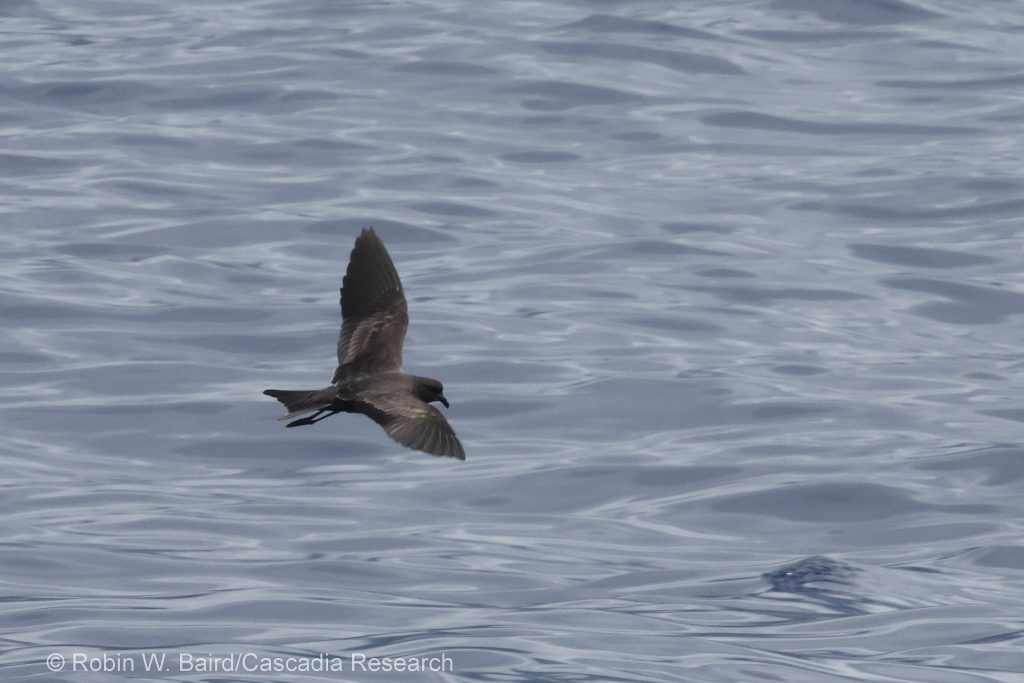
We also record seabirds when working in Hawai'i and this trip we've seen two unusual species. When we get photos of unusual or particularly difficult-to-identify species we send them to experts, and the photo above is likely of a Black Storm Petrel , a species not previously recorded in Hawai'i. This sighting was on November 12th, and on the 10th we also photographed a Christmas Shearwater, the first time we've knowingly seen that species during our work. If you want to learn more about the seabirds we've documented check out our seabird page.
November 11th update
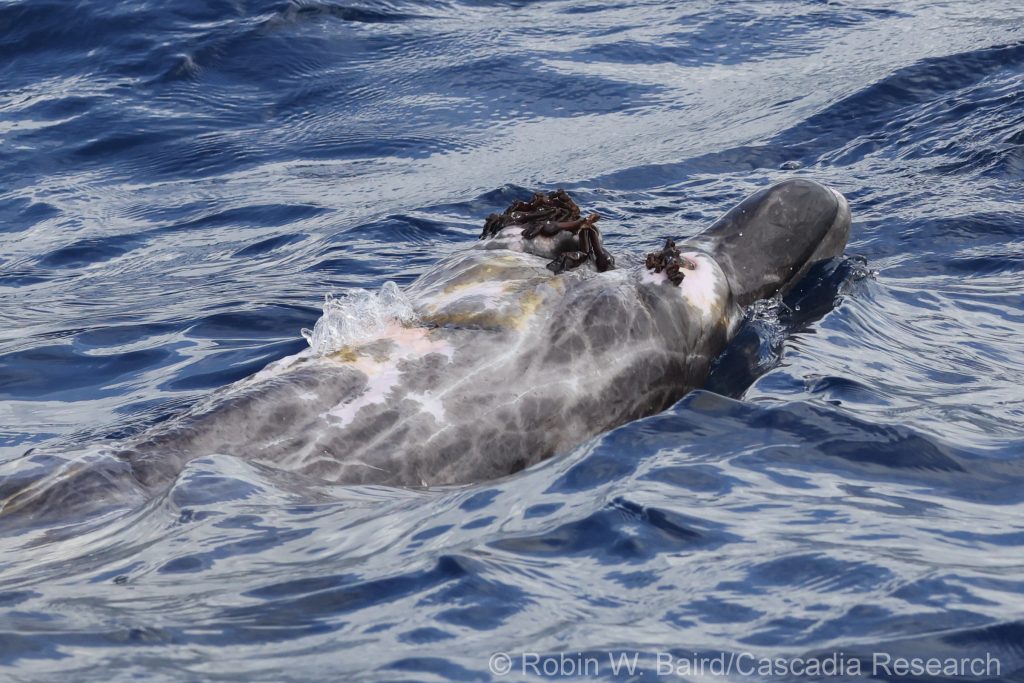
Day 2 of our field effort was another good day for beaked whales - today we had a group of eight Blainville's beaked whales! The photo above is an adult male, with extensive white scarring on the head from fighting with other adult males. The erupted teeth are covered in stalked barnacles, with the left tooth having a lot more barnacles attached, likely because a lot of the tooth is exposed due to fighting.
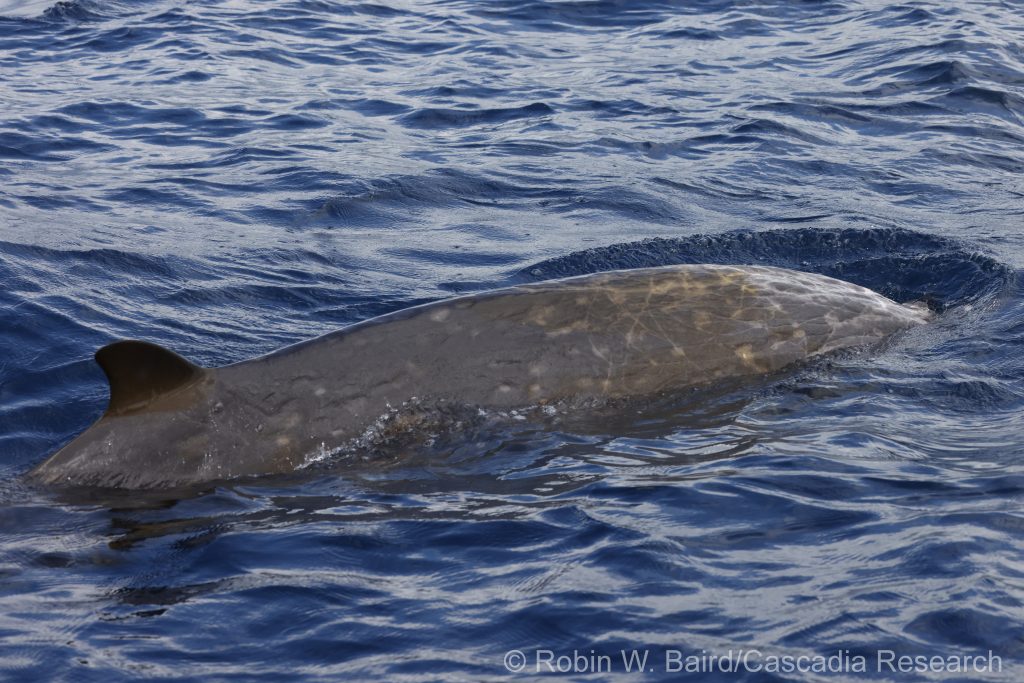
This is a photo of the same adult male Blainville's, a few seconds later, showing the extensive linear scarring typical of adult males. This individual is HIMd155 in our catalog, first identified off the island in 2009. In addition to ID photos of all eight individuals in the group, we were able to deploy a SPLASH10-F LIMPET satellite tag on this individual, to track movements and dive behavior.
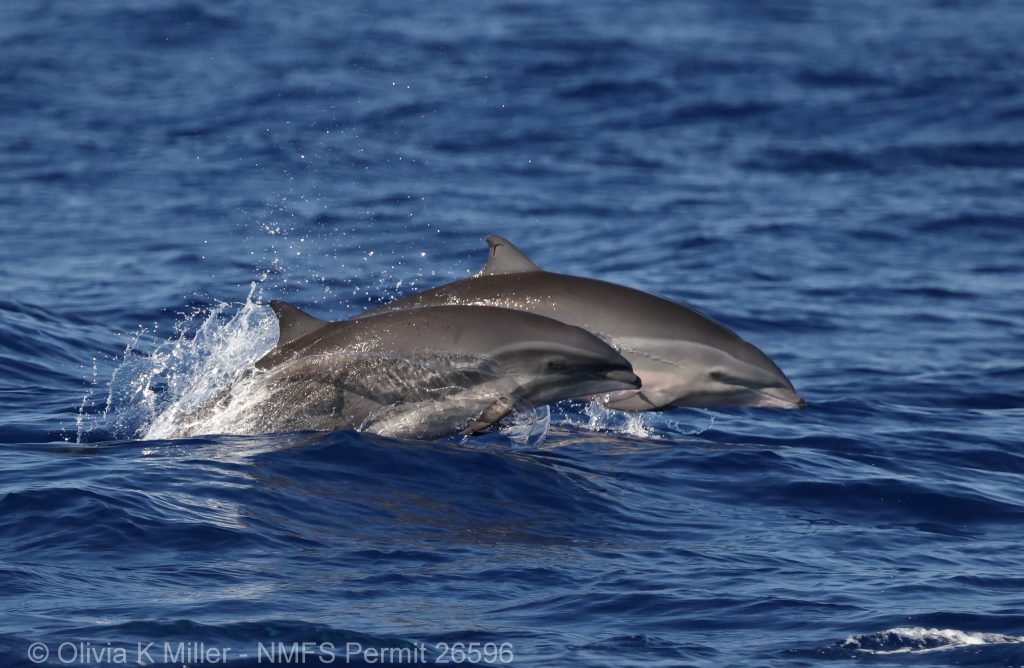
In addition to the Blainville's beaked whales, we also encountered a mixed group of melon-headed whales and Fraser's dolphins! The above photo is of a pair of Fraser's dolphins, with the individual in the foreground a sub-adult male, starting to develop the strong black mask characteristic of adult male Fraser's dolphins. This species is very uncommon around the main Hawaiian Islands - this was only our eighth sighting of this species in our 27 years of working around the islands! If you want to learn more about Fraser's dolphins in Hawaiian waters check out our Fraser's dolphin web page.
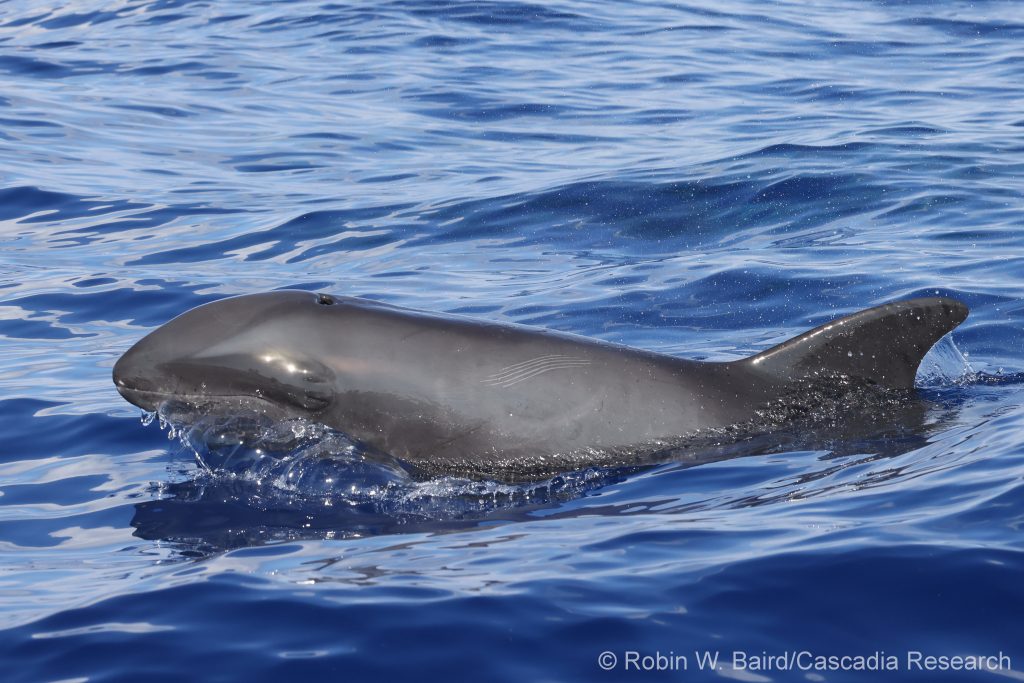
The Fraser's dolphins were associated with a group of a couple hundred melon-headed whales. This group is part of the Hawaiian Islands stock of melon-headed whales, which roam widely offshore around the islands - check out our melon-headed whale web page for more information.
November 10th update
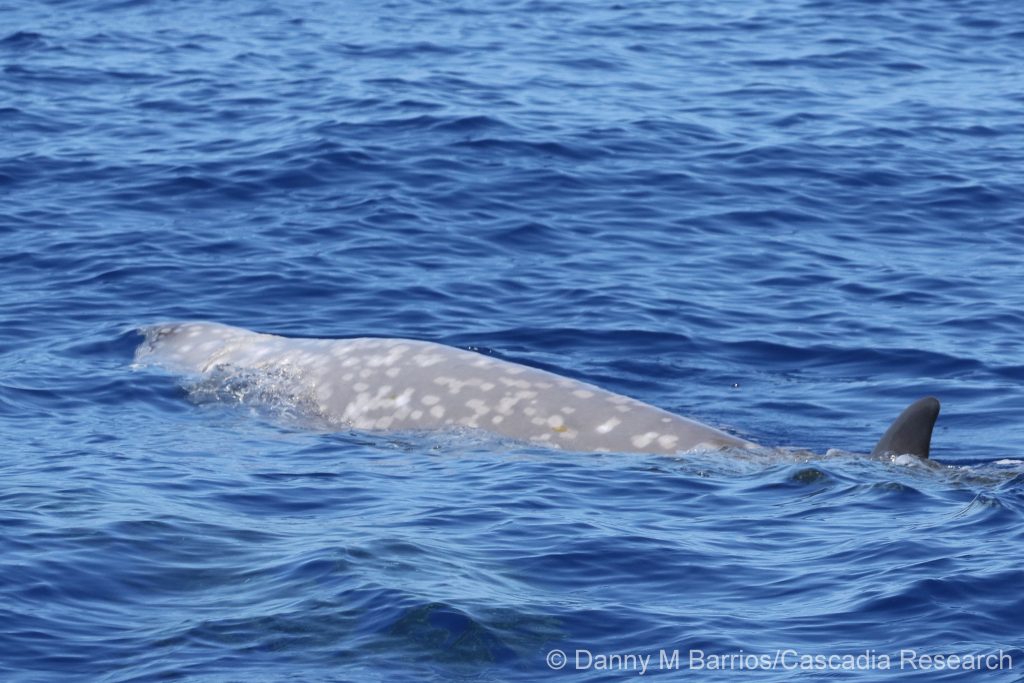
We had a good first day on the water, with two sightings of goose-beaked whales! We can sometimes go an entire project without seeing any of these deep-divers, so two sightings on our first day hopefully bodes well for encounter rates over the next nine days! The photo above in an old adult female goose-beaked whale - we identify it as an old adult based on the white pigmentation, and as a female based on the lack of any linear scars that are found on adult males.
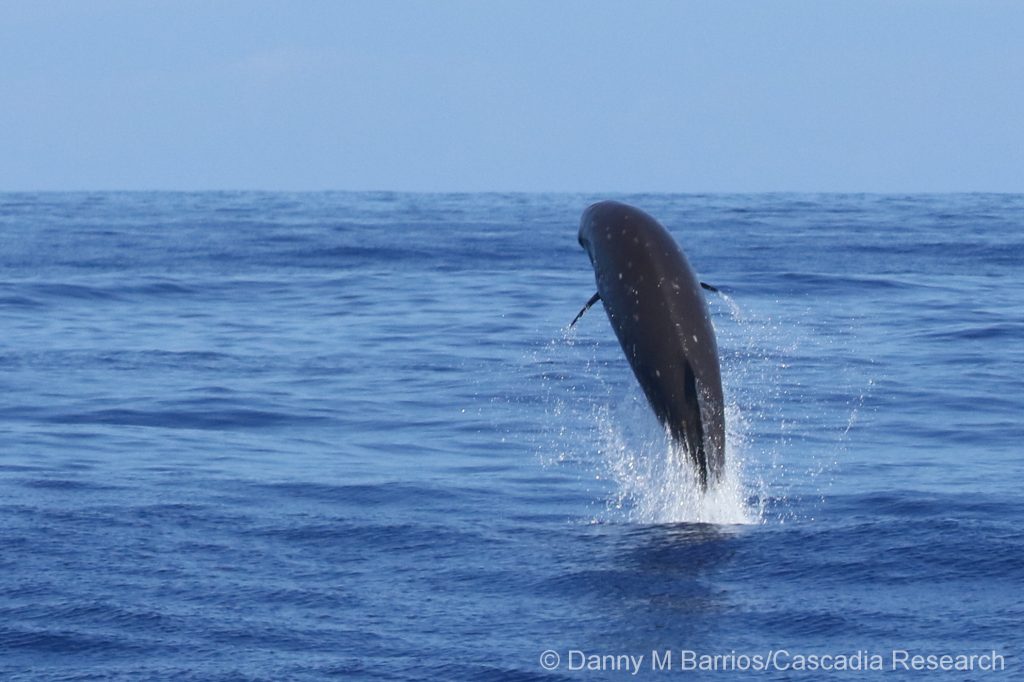
One of the individuals in the first group, a sub-adult based on body size and on scarring, breached five times during the encounter. Goose-beaked whales acquire white scars as they age from cookiecutter shark bites, and this individual has relatively few of these scars, indicating it is still relatively young.
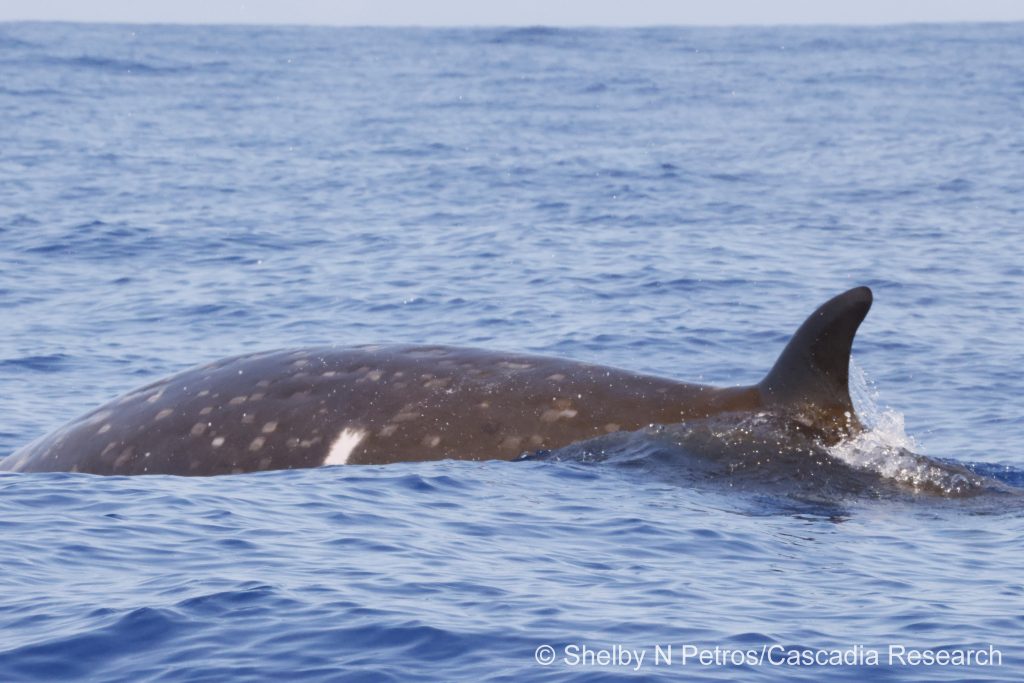
The individual above is also an adult female goose-beaked whale, albeit not a very old one. If you want to learn more about goose-beaked whales in Hawaiian waters, check out our web page on this species.
All photos on this page taken under NMFS Scientific Research Permit No. 26596. If you'd like more information on this project, contact Robin Baird (rwbaird "at" cascadiaresearch "dot" org)