
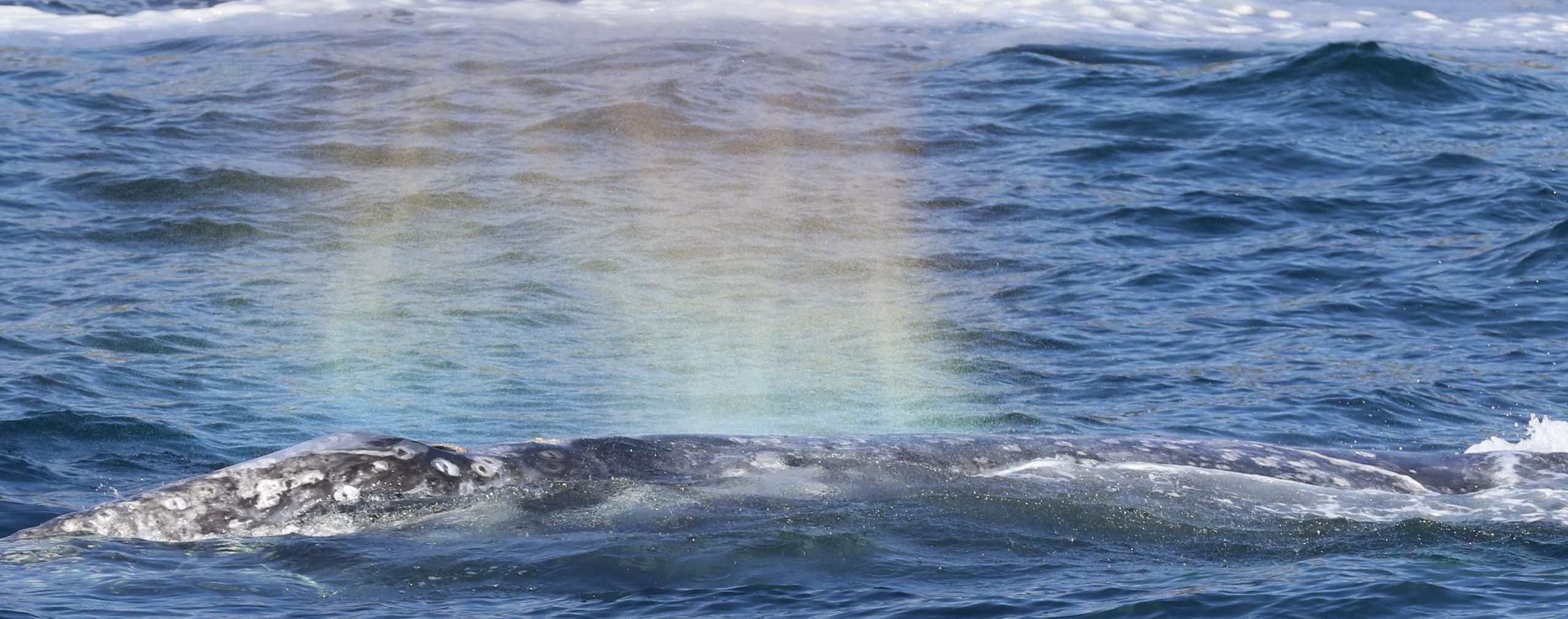
Gray whales (Eschrichtius robustus) are one of the most iconic and frequently seen large whales along the Pacific Coast. Cascadia Research Collective has studied gray whales for more than 30 years, providing some of the most comprehensive data on their movements, behavior, and long-term health.
Size & Appearance
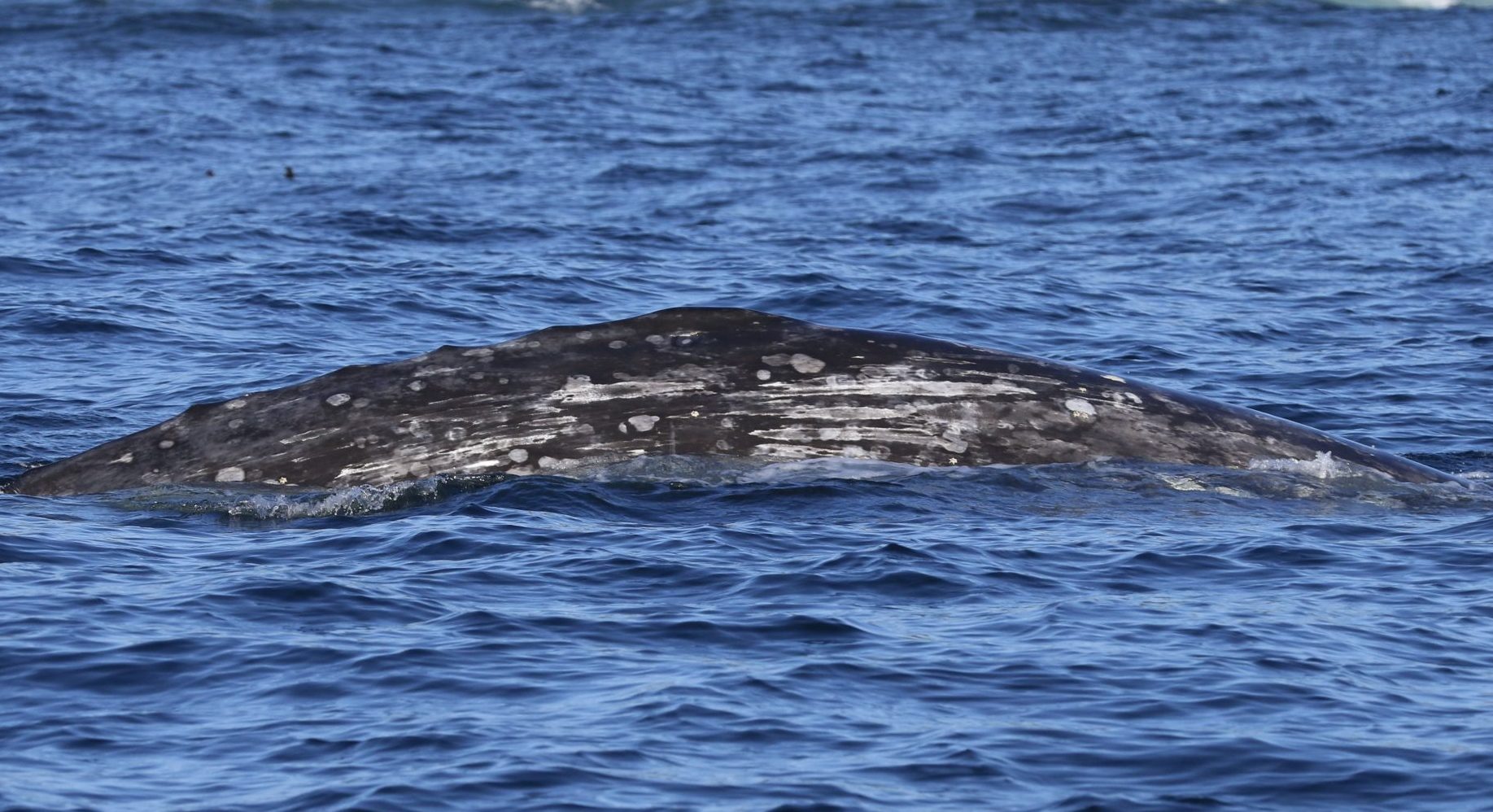
Gray whales are medium-sized baleen whales, typically reaching 40–50 feet in length and weighing up to 40 tons. Their mottled gray coloration, barnacle patches, and whale lice give each individual a unique appearance. Although their coloration patterns can change over time, unique markings along their flanks (left and right side) and under side of the tail provide a means to identify individuals and track them throughout their life.
Life Span
Gray whales are estimated to live around 50 to 70 years, though some individuals have been estimated to reach 80 years or more based on whaling data. Although the age of individuals first documented in the 70s in unknown (unless they were dependent calves), they are just starting to reach the minimum age of 50 years old.
Diet & Feeding
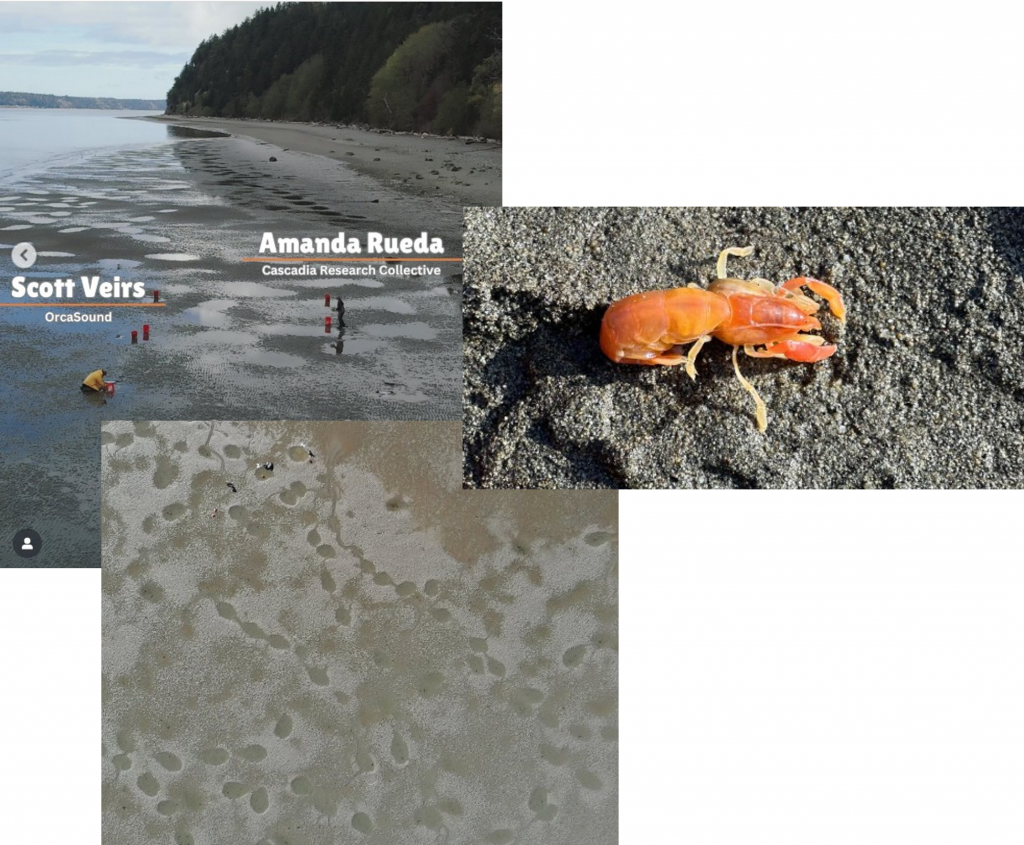
Gray whales primarily feed on small invertebrates such as amphipods and mysids. While they are famous for benthic feeding, creating pits along the seafloor, they can use diverse foraging strategies, including feeding on herring spawn near shore.
Gray Whale Quick Facts
Scientific name:
Eschrichtius robustus
Size:
40 – 50 ft (12 – 15 m)
Weight:
Up to 40 tons
Life span:
50 – 70+ years
Population size: ~12,000
Where to see them:
Puget Sound (Sounders)
Northern CA to British Columbia (PCFG)
Nearshore along the US West Coast, especially during migration
Diet:
Amphipods, mysids, and other small invertebrates
Feeding methods:
Benthic feeding, suction feeding, kelp-bed foraging, and other nearshore techniques
Main threats:
Entanglement, vessel strikes, climate-driven prey shifts, noise disturbance, HABs/disease
Cascadia’s role:
Over 30 years of research including photogrammetry, photo-ID, tagging, and PCFG/Sounder monitoring
Migration Along the US West Coast
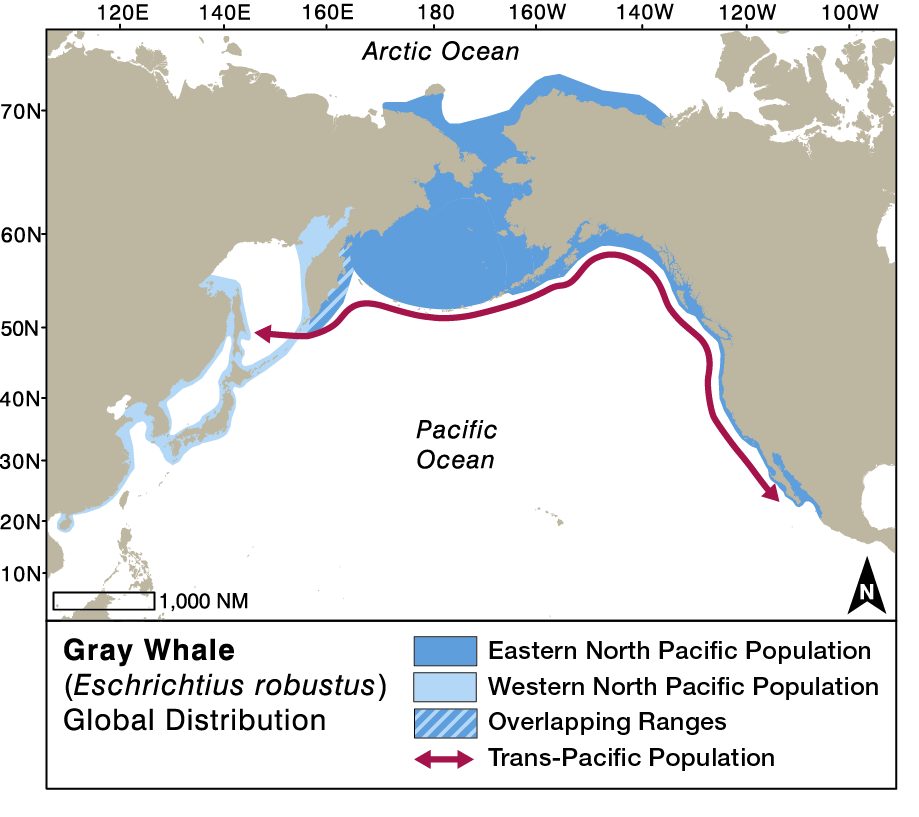
Gray whales complete one of the longest migrations of any mammal, up to 12,000 miles round-trip. Their route brings them close to shore, making them a familiar sight to coastal communities and during whale watching trips.
There are Two Distinct Gray Whale Populations in the North Pacific
Eastern North Pacific (ENP) Population
The ENP is the larger and more visible population, migrating between Baja California’s breeding lagoons and Arctic feeding grounds each year. This population typically numbers between 15,000 – 20,000 individuals, though recent fluctuations have raised concerns about changing ocean conditions.
Western North Pacific (WNP) Population
The WNP gray whales are considered endangered with only a few hundred individuals in the entire populaiton. Some WNP whales have been documented mixing with the ENP population on the feeding grounds, as well as during the migration to the Baja breeding grounds, making ongoing research essential for understanding their conservation needs.
The “Sounders”
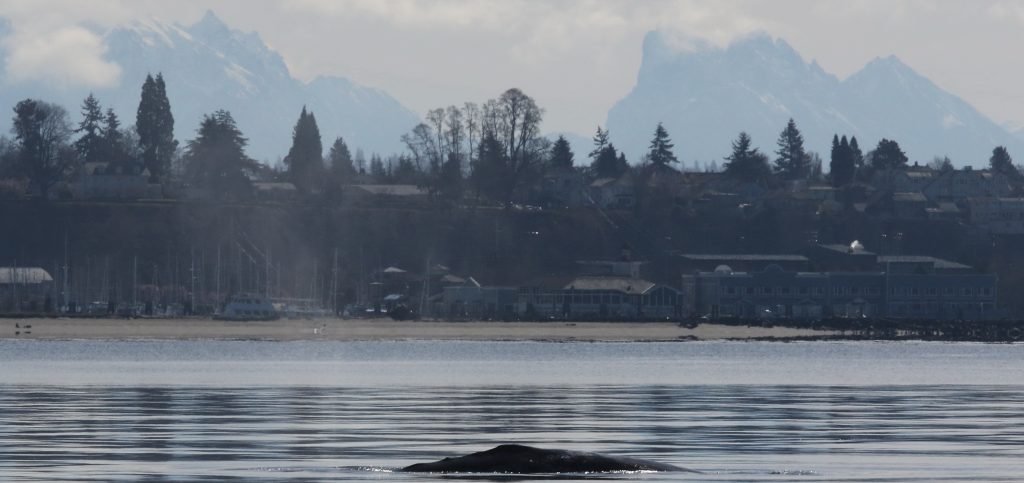
A small subset of gray whales spends spring and early summer feeding in Puget Sound and nearby inlets. Known locally as the “Sounders,” these whales return predictably each year and show strong site fidelity to Washington’s inland waters.
Pacific Coast Feeding Group (PCFG)
The PCFG is a regionally important subgroup of ENP gray whales that stays between Northern California and British Columbia during the summer instead of traveling to the Arctic.
Key characteristics include:
- High site fidelity to specific nearshore feeding areas
- Unique, flexible foraging behaviors
- Smaller body size compared to migratory ENP whales
- Individual whales known and tracked across decades
Cascadia maintains one of the longest-running PCFG photo-ID catalogs, giving unprecedented insight into their ecology and long-term trends.
Threats to Gray Whales
Gray whales face a growing number of environmental and human-related threats, including:
- Entanglement in fishing gear
- Vessel strikes
- Shifts in prey availability tied to climate change
- Noise disturbance from vessels and industry
- Harmful algal blooms and disease
- Habitat degradation and coastal development
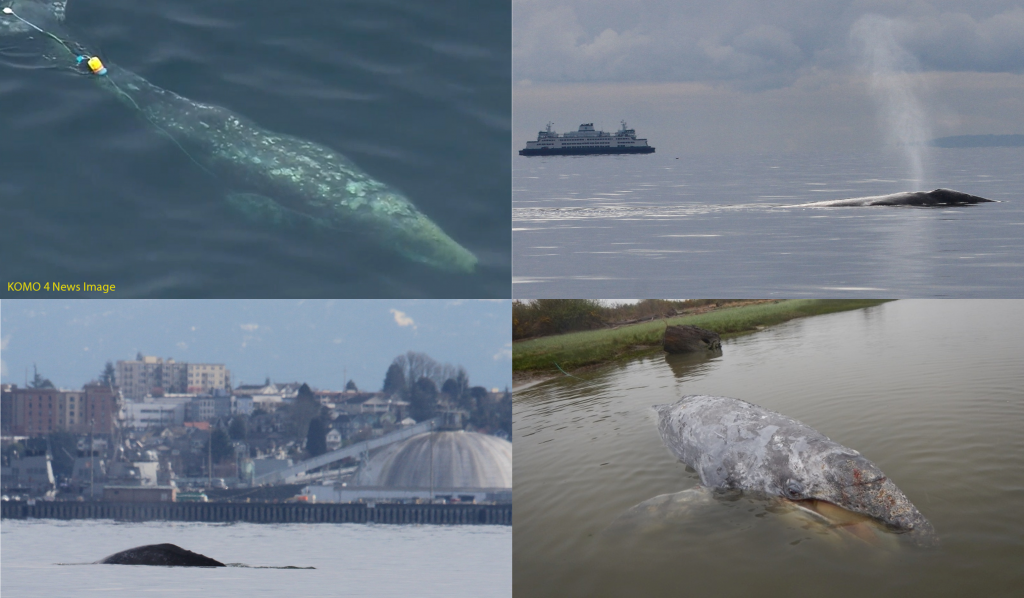
Cascadia’s research plays a critical role in understanding these challenges and supporting science-based management and recovery efforts.
Cascadia’s Gray Whale Research
Cascadia Research Collective has led gray whale studies since the 1980s, with work that includes:
- Long-term photo-identification catalogs tracking thousands of individuals
- Population trend analyses across decades of data
- PCFG and Sounders monitoring to understand regional residency and behavior
- Foraging ecology research on prey availability and habitat use
- Biopsy sampling to study genetics and contaminants
- Suction cup tagging to document fine-scale movements
- Stranding response and health assessments throughout Washington State
This multi-disciplinary approach helps inform agencies, managers, and the public about the status and conservation needs of gray whales