
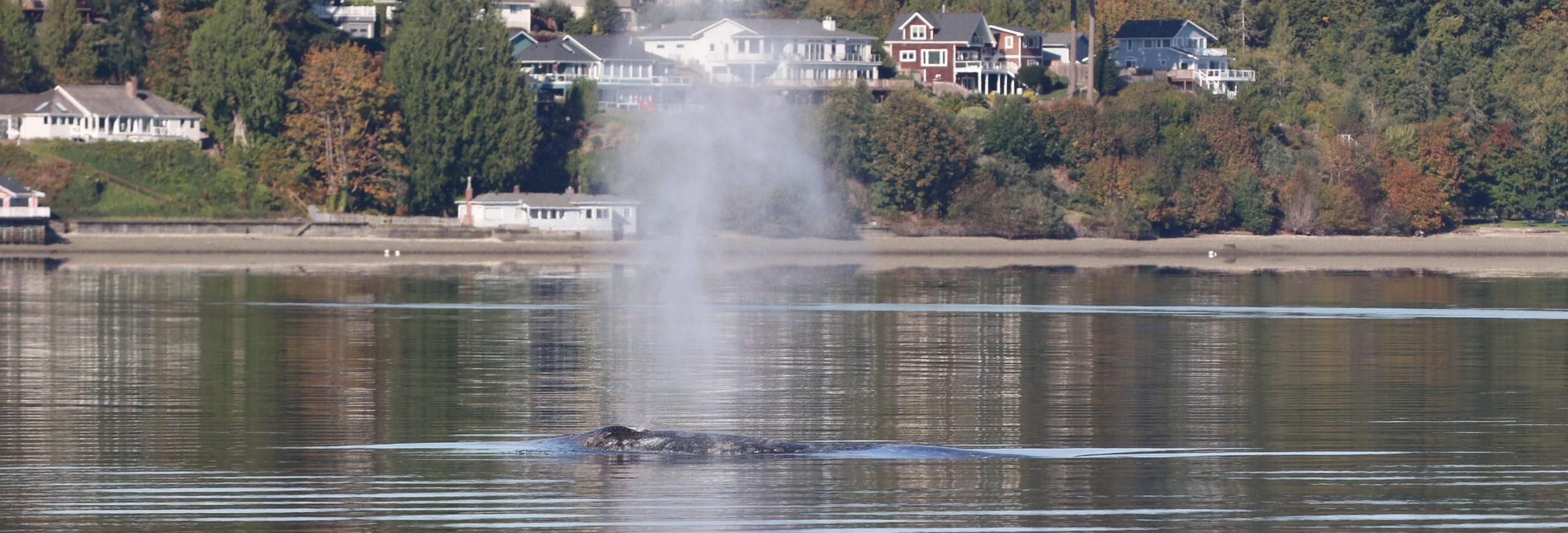
On 10 October 2026, Cascadia Research conducted an on-the-water assessment of a gray whale that has now spent six months in southern Puget Sound. The whale appeared to have improved body condition since it was first sighted in the spring, suggesting it has been successful in finding productive feeding areas during its travels.
Gray whale CRC-2700 was initially documented in mid-April 2026 near Bremerton, malnourished and lethargic. Since then, Cascadia Research, Washington Department of Fish and Wildlife, and Orca Network have been monitoring its location and condition. For several weeks it remained in the Bremerton area, dodging an increasing number of boaters and fighting off attacks by transient killer whales. In August, it began exploring other areas of southern Puget Sound. It has often been observed feeding close to shore, turning on its side and scooping up sediment to capture benthic invertebrates.
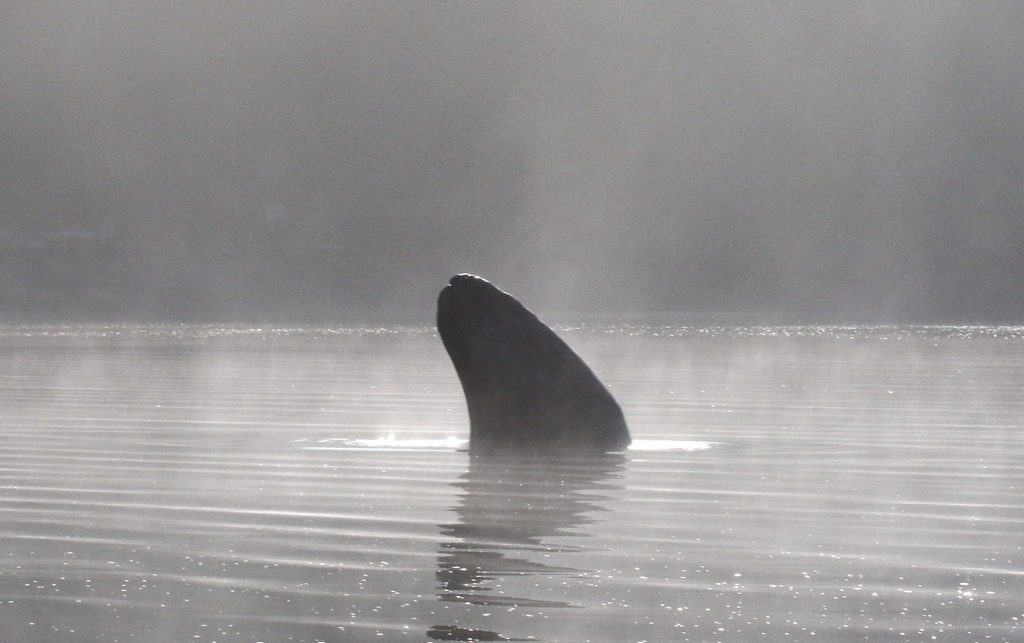
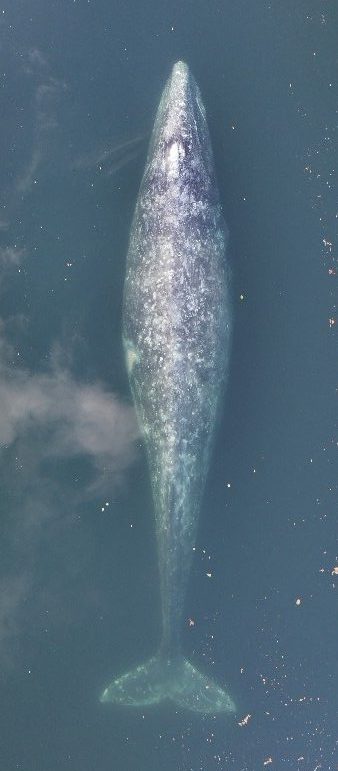
The recovery of CRC-2700 is a story of resilience during a turbulent time for gray whales. The gray whale population has been struggling since 2019, when an Unusual Mortality Event (UME) was declared due to a significant increase in strandings throughout their range. The UME was officially closed in 2023, but this year we documented 31 dead grays in Washington, just shy of the record number of 34 during the first year of the UME.
The increase in mortalities and decrease in calf production seen over the last several years have been linked to changing conditions in the Arctic that have affected gray whale prey. In times of nutritional stress, starving gray whales often venture into areas off the migration route searching for food. In many cases, these forays prove to be unsuccessful and even dangerous, as these debilitated whales are more vulnerable to traumatic events such as ship strike, entanglement, and killer whale predation.
We are unsure how long this whale will remain in the Puget Sound, but we have noted behavioral changes in some known individuals that suggest this animal may decide to overwinter here.
The “Sounders”, a small group of gray whales that discovered the productive ghost shrimp beds around Whidbey and Camano Islands in the early 1990s, have fared better overall during this UME, but have utilized the Puget Sound feeding areas differently over the last few years. In the past, these whales arrived in Puget Sound in March to feed for a couple of months before continuing to the Bering Sea and not returning until the following spring. However, over the past few years some of these individuals have returned as early as December and have stayed throughout the winter and spring, foregoing their migration to the breeding grounds in Mexico and prioritizing a known area of available food over reproduction. At least two Sounders have stayed through the whole of the summer and remain here still.
While we are encouraged by CRC-2700’s improvement, we remain concerned about its safety while in our waters. We will not be providing real-time details about its specific location, and we ask the public to do the same to avoid attracting boaters. If you do see this animal, please do not approach, and please report sightings to info@cascadiaresearch.org.