
Naturalists, researchers, and authorized responders from five organizations worked together to successfully remove fishing gear from a well-known Puget Sound humpback whale.
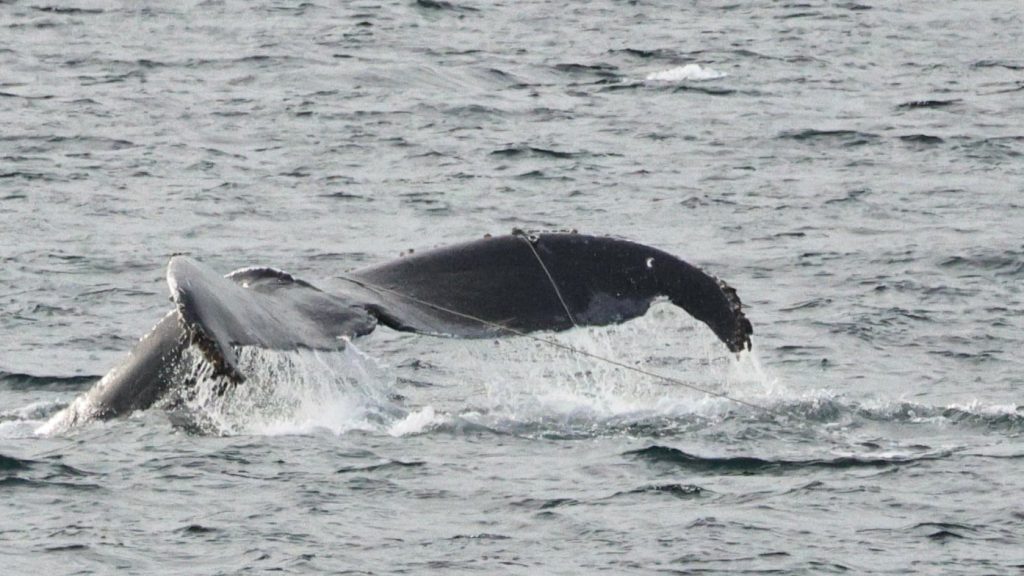
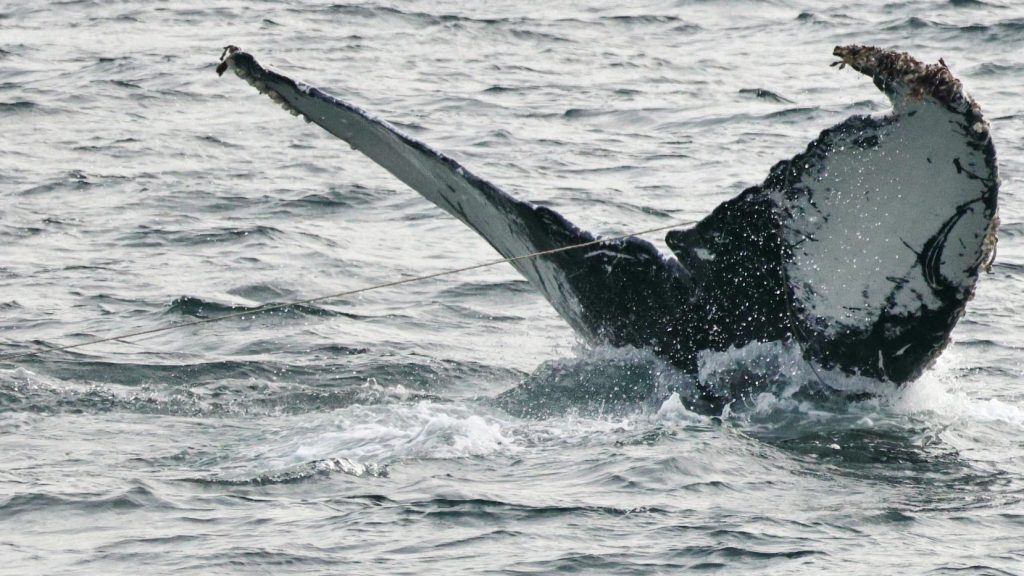
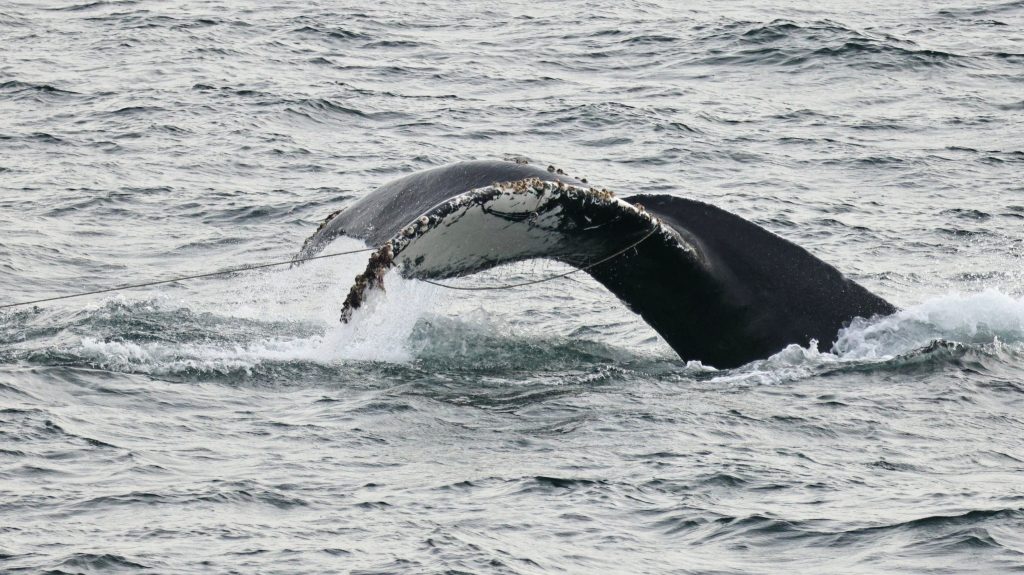
Photos of a humpback whale locally known as Falcon, CRC-13514, first documented north of Seattle with recreational fishing gear wrapped around its tail. Photos by Rachel Rodell of Puget Sound Express, a member of the Pacific Whale Watch Association.
November 13, 2026. A humpback whale known locally as Falcon, CRC-13514, was successfully freed from fishing gear Wednesday evening in Puget Sound, following a coordinated response involving naturalists, researchers, and NOAA authorized whale entanglement responders from Washington.
For the past several weeks, Falcon has been a welcome sight for whale watchers throughout Puget Sound, with sightings reported near Tacoma, Gig Harbor, and Carr Inlet. On Wednesday afternoon, the crew of Puget Sound Express, a member of the Pacific Whale Watch Association, encountered Falcon just north of Seattle and noticed rope wrapped around the whale’s tail. They documented the entanglement and immediately contacted NOAA’s entanglement hotline, initiating a coordinated response.
With daylight already running short, teams from Cascadia Research Collective (CRC), based in Olympia, and SeaLife Response, Rehabilitation, and Research (SR3), based in Des Moines, mobilized to respond. However, the distance to the whale meant responders faced a challenging timeline: they were more than an hour away and would have limited time to locate Falcon, assess the entanglement, and attach a telemetry buoy before sunset.
Fortunately, researchers from the Center for Whale Research (CWR) and Orca Behavior Institute (OBI), who were already in the area conducting orca research, volunteered to assist. The team quickly relocated Falcon, collected drone imagery to document the entanglement, and remained with the whale to relay its movements and condition to the incoming response teams.
Drone images revealed rope wrapped around Falcon’s fluke, with approximately 100 feet of line trailing behind. As Falcon continued traveling south, the whale gradually closed the distance to the approaching response teams. SR3 responders arrived first and took over monitoring duties, allowing the CWR/OBI researchers to return to port before sunset. The CRC team arrived shortly afterward, with two SR3 responders joining them aboard the CRC vessel to begin the disentanglement attempt.
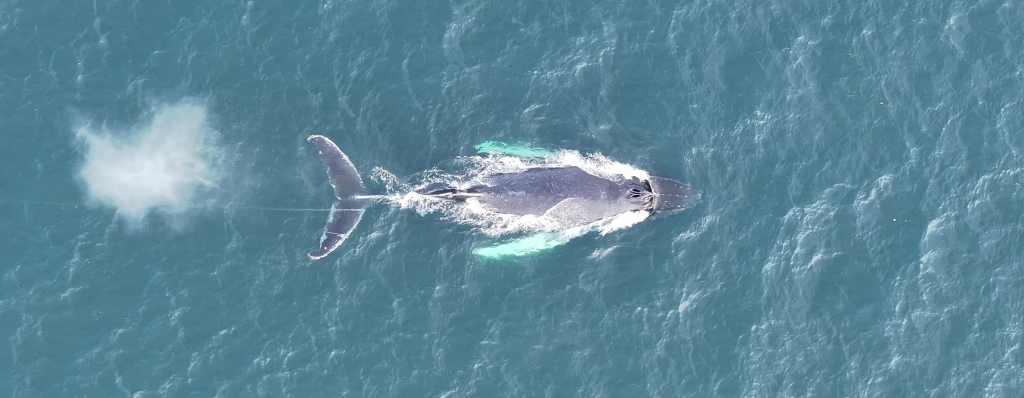
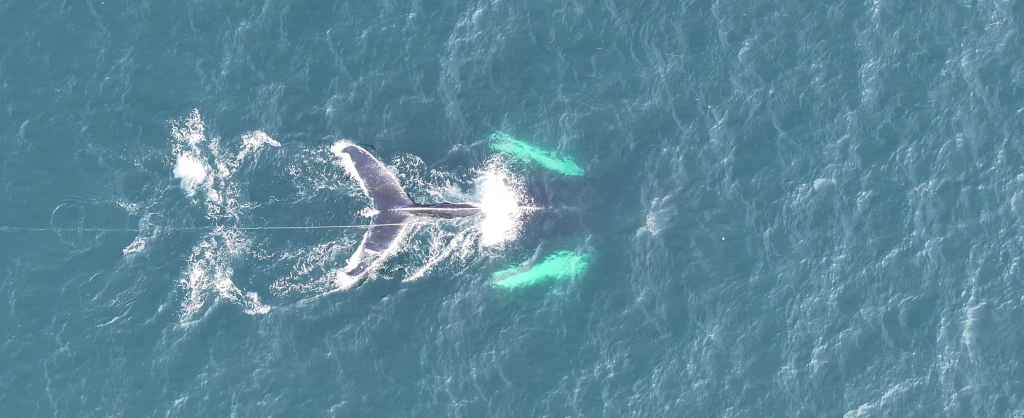
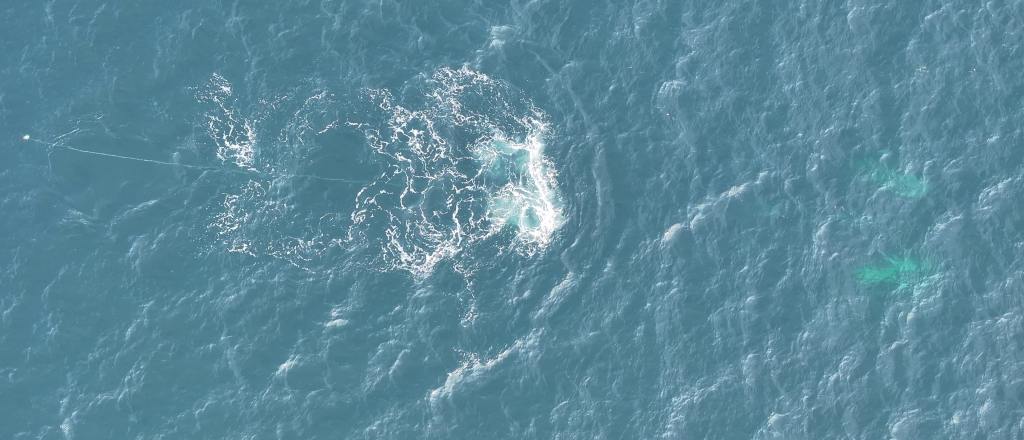
Drone images showing the entangling line trailing from a humpback whale’s right fluke blade, a whale locally known as Falcon, CRC-13514. Photos by Center for Whale Research and Orca Behavior Institute under NMFS Permit #24359.
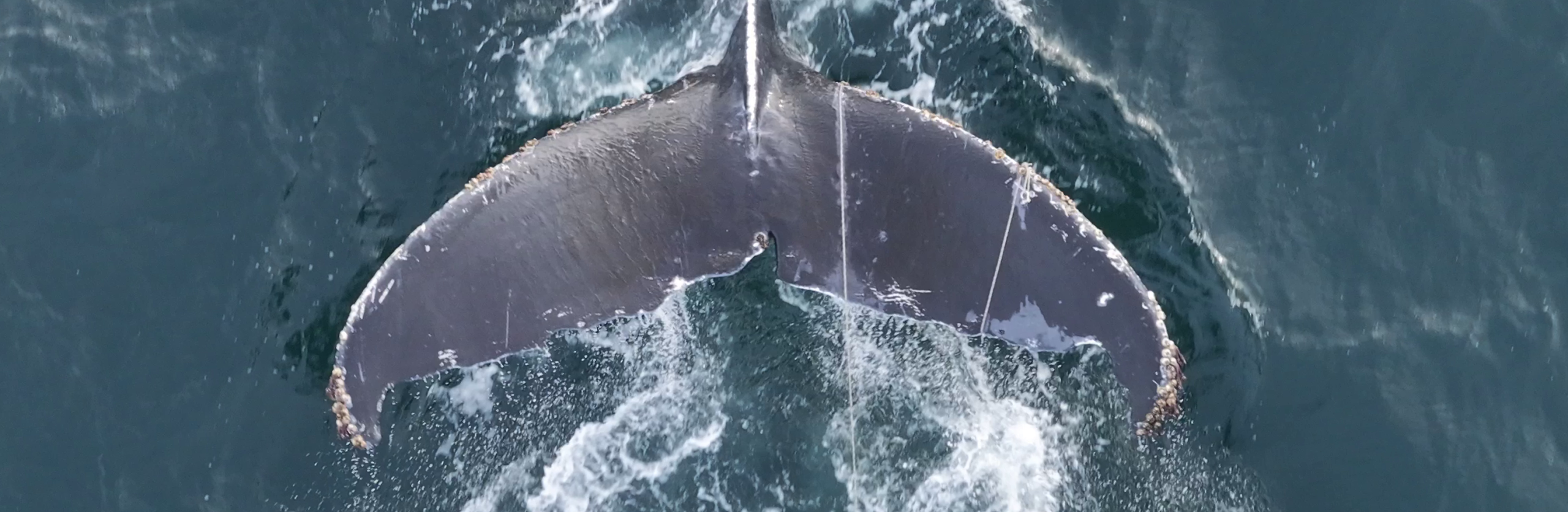
Drone images showing the entangling line around the Falcon’s right fluke blade. Photos by Center for Whale Research and Orca Behavior Institute under NMFS Permit #24359.
“A successful disentanglement often begins long before responders reach the whale,” said Doug Sandilands, a lead responder with CRC. “Having people on the water who can stand by an entangled animal, relocate it if needed, maintain visual contact, document the gear, and communicate its movements gives response teams the critical information they need to prepare and act. In Falcon’s case, CWR and OBI’s willingness to stop their own research activities to stand by and assist made all the difference, particularly with daylight running out.”
With only about 20 minutes of daylight remaining, the team had very little time to work. The trailing line was submerged, making it impossible to see from the vessel.
The team’s initial objective was to use a grapple to catch the trailing line to attach a telemetry buoy, allowing responders to monitor the whale overnight until daylight would enable a full disentanglement. The first attempt was unsuccessful. Hoping the line might have already fallen away, the team made another approach. This time, Falcon lifted its flukes high out of the water, revealing that the rope was still wrapped around the right fluke blade.
A second grapple attempt also failed. With daylight disappearing, the team decided to make one final attempt before suspending operations for the evening.
A few minutes later, Falcon surfaced approximately 90 meters from the vessel. As the boat approached, the team threw the grapple once more. This time, it caught the submerged line.
Falcon reacted to the additional weight on the line, surging forward and quickly pulling the control line and telemetry buoy away from the response vessel. Within seconds, the telemetry buoy stopped moving, and a second buoy surfaced. Initially, responders were concerned the grapple might have cut through the thin trailing line, potentially leaving some of the recreational fishing gear attached to the whale.
The team quickly gathered the buoy and lines. To their relief, they discovered they had recovered the entire length of entangling gear. Falcon surfaced shortly afterward and raised its flukes high above the water, allowing the team to confirm that all of the gear had been successfully removed.
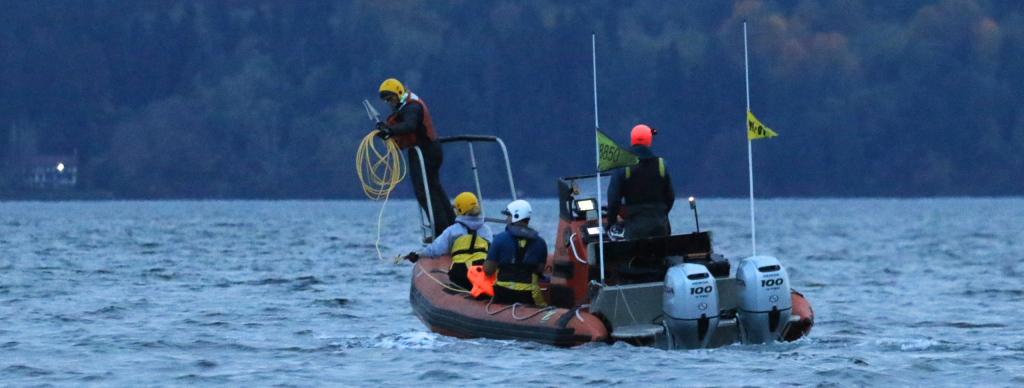
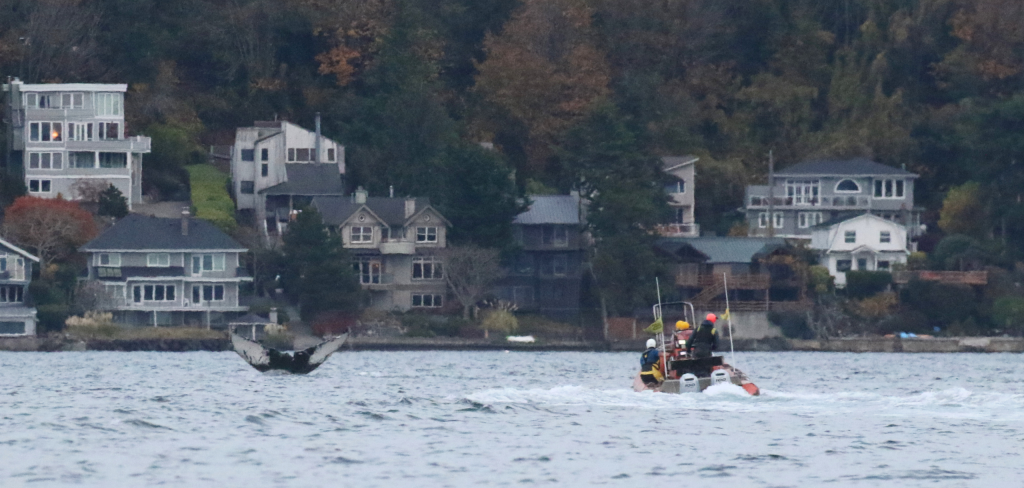
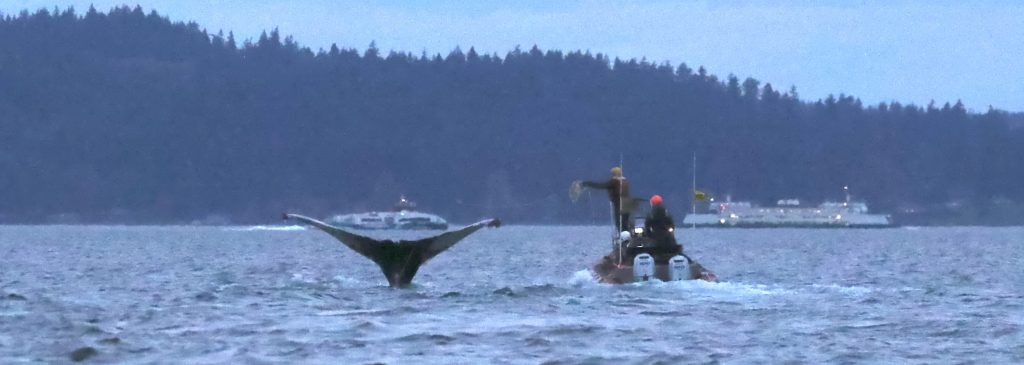
NOAA-authorized CRC-SR3 response team, working to attach telemetry buoy to the entangling gear trailing from Falcon in the busy waterways off West Seattle. Photo by SR3, NMFS Permit #24359.
After a challenging race against daylight, Falcon was free.
Video of NOAA-authorized CRC-SR3 responders attaching a telemetry (tracking) buoy to the entangling gear trailing behind a humpback whale locally known as Falcon, CRC-13514, and removing all the entangling line.
“All responses are unique and this one was no exception.” said KC Scofield, a responder from SR3. “What was amazing to see was the collaboration and communication of all groups on the water and on shore to muster and pull together for a successful disentanglement so quickly! It was a perfect example of how it takes a village and a little bit of luck to make a potentially challenging response go so smoothly.”
By Friday afternoon, Puget Sound Express found Falcon once again off Edmunds and were able to get better looks in the daylight, confirming no gear and no major injuries. For now, this familiar Puget Sound visitor is free of the fishing gear and can start the journey from Washington to Hawaiʻi for the breeding season unimpeded.
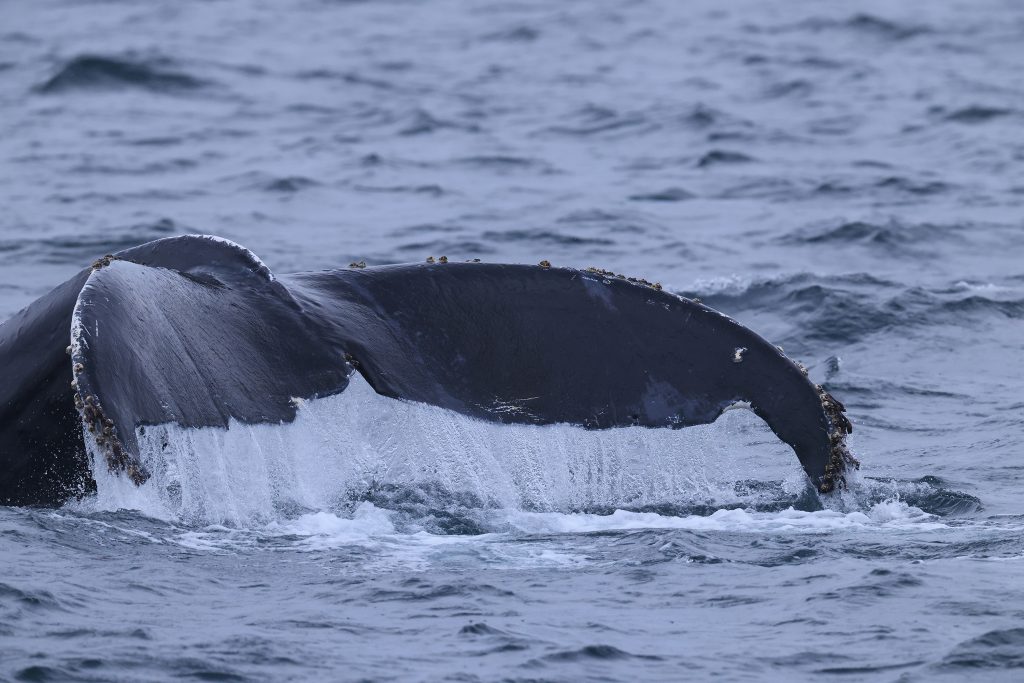
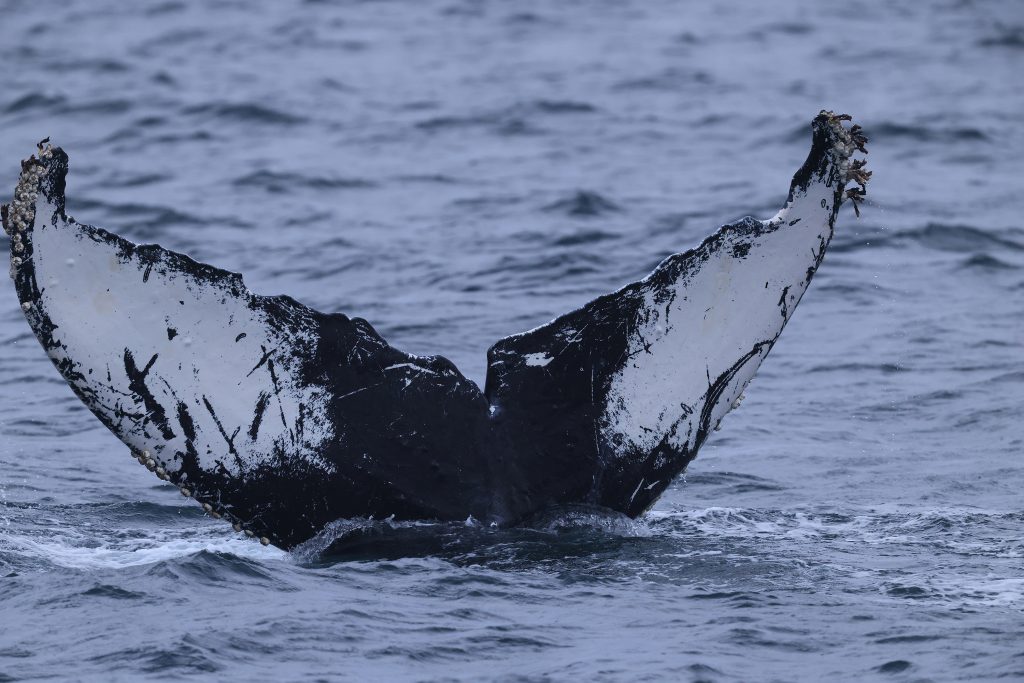
Falcon, CRC-13514, photographed north of Seattle on Nov 13, 2026, just two days after being freed of an entanglement, with no gear or lasting injuries from the event. Photos by Bart Rulon of Puget Sound Express.
Real-time reporting can significantly increase the chances of a successful response.
What to do if you see an entangled whale:
- Stay at least 100 yards away
- Immediately report the sighting to the NOAA entanglement hotline at 1-877-SOS-WHALE (1-877-767-9425) or hail the US Coast Guard on Ch16
- Take video or photos of the whale and entangling material
- Stay in the area of the whale at a safe distance (200+ yards) to monitor it until the response team or standby vessel arrives
The West Coast Entanglement Response Network is part of a national and global effort to reduce large whale entanglements through safe rescue operations, data collection, and prevention strategies. All response activities (including documentation, approaching the whale, attaching a telemetry tag, and removing gear) were conducted by trained and authorized responders under NOAA permit #24359, following international and national safety standards that prohibit entering the water and prioritize the safety of both the whale and the crew.