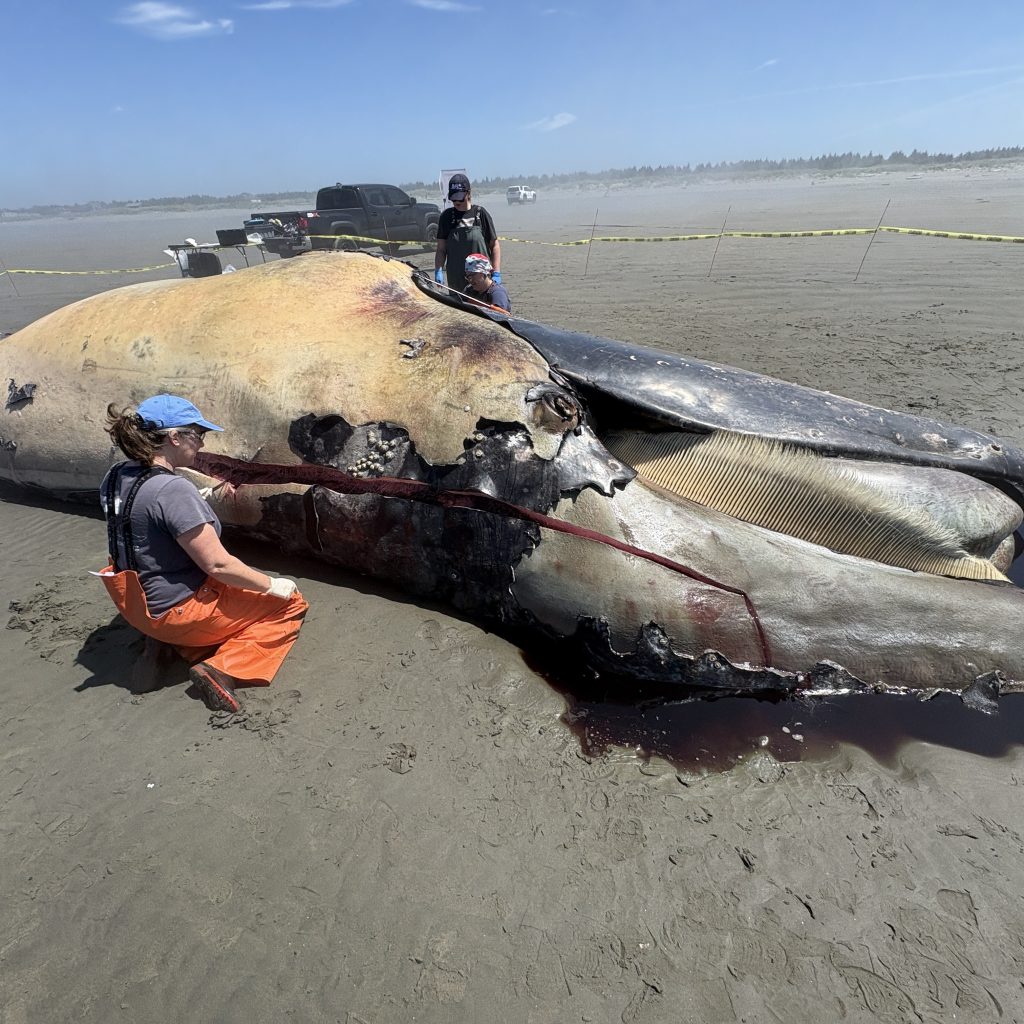
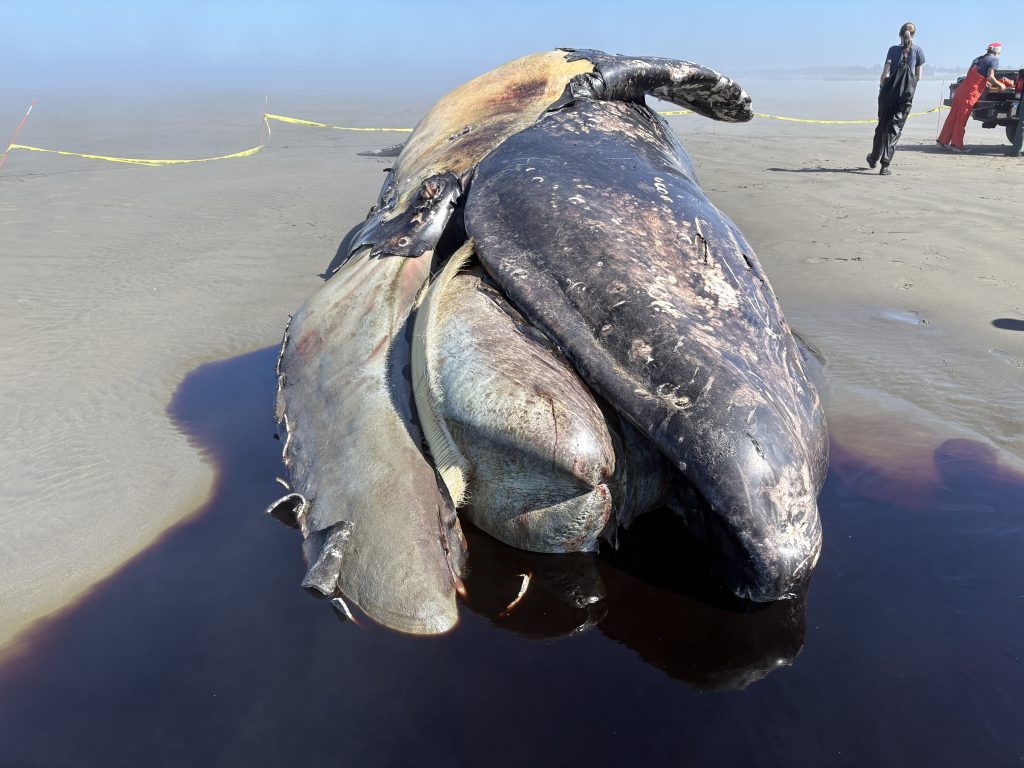
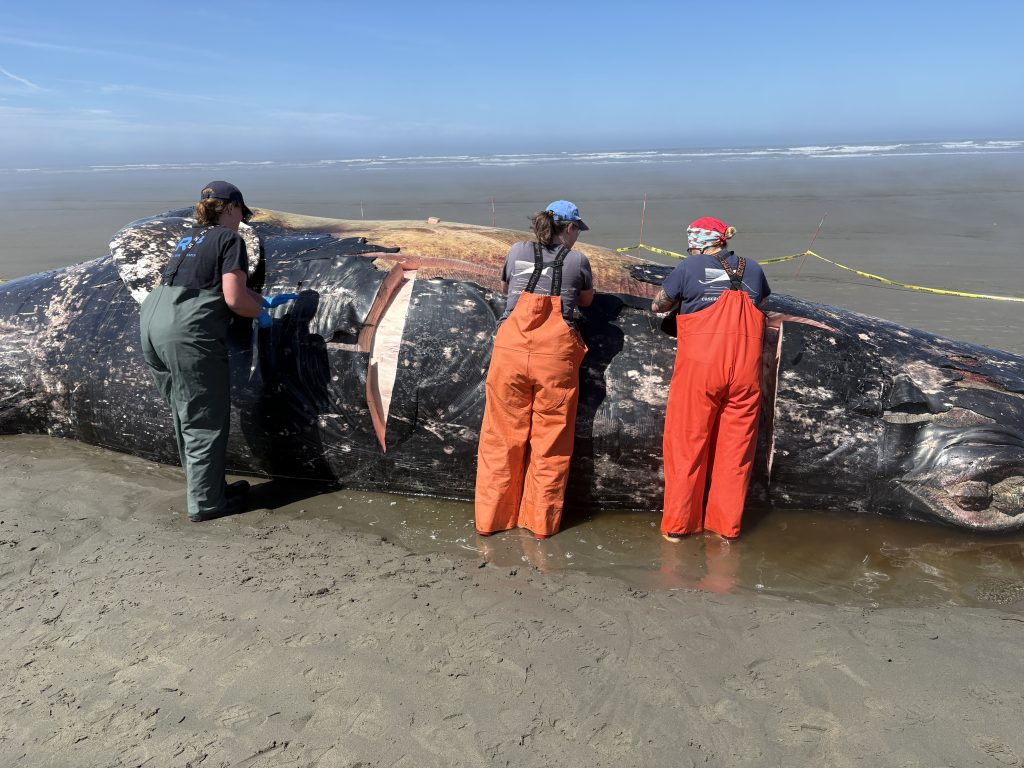
On 18 June 2026, Cascadia Research, with help from SR3, examined a female gray whale in Ocean Shores, WA. This is the 30th dead gray whale in Washington so far this year (see routinely updated working list of strandings here). This is already the second highest number of annual gray whale mortalities ever recorded in Washington; the highest being 34 whales in 2019 and we still have more than 6 months remaining in 2026.
The most common finding among examined whales has been malnutrition, sometimes accompanied by internal trauma consistent with vessel strike. This whale was no different. It was a female, around 40 ft long, that was malnourished with trauma to the head, consistent with a vessel strike. Tissue samples will be analyzed over the coming weeks and months, which may provide additional insight into other factors that may be contributing to the overall poor condition of most of these whales.
The eastern North Pacific gray whale population has experienced high mortality levels since 2019, which has been linked to ecosystem changes in their Arctic feeding grounds that has affected both quality and quantity of prey. For more information about gray whales use of Washington waters and Cascadia’s long term gray whale research program, please see this article by Cascadia’s founder John Calambokidis.
Funding for response to strandings, entanglements, and the research done after each event is becoming limited in comparison to the mortality rates that are occurring. We appreciate any support you can provide to assist us in providing this crucial response and research.
Images taken by Cascadia Research Collective under NMFS Permit #24359